
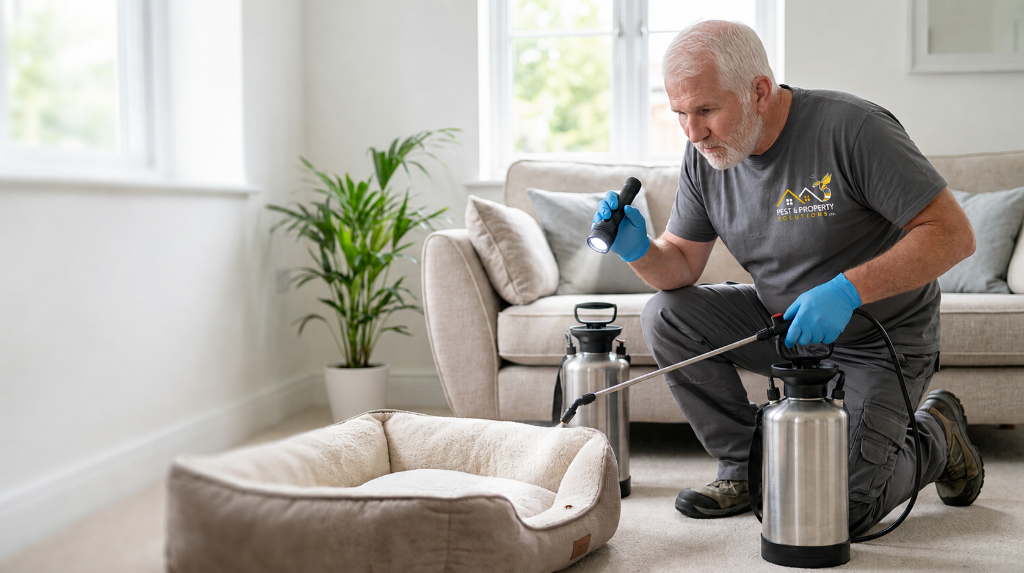
Professional Flea Treatment for South Wales Homes
Fleas are one of the most common domestic pest problems in South Wales, particularly in properties with cats or dogs. A single female flea can produce up to 50 eggs per day, making professional environmental treatment essential.
5.0 · 200+ reviews on Google & Checkatrade
"Had treated the cat but still had fleas everywhere. Pest & Property explained why and treated the whole house properly. Within two weeks the problem was completely gone. Wish I'd called sooner."
5.0 · 200+ reviews on Google & Checkatrade
"Had treated the cat but still had fleas everywhere. Pest & Property explained why and treated the whole house properly. Within two weeks the problem was completely gone. Wish I'd called sooner."
Understanding the Problem
What You Need to Know About Flea Treatment
Here's what most flea treatments miss: treating your pet kills adult fleas on the animal, but up to 95% of a flea infestation exists in your home, as eggs, larvae and pupae in carpets, skirting boards and soft furnishings. Treating the pet without treating the environment means the problem persists and recurring bites continue for weeks.
Flea pupae are particularly resilient. They can remain dormant for months inside a protective cocoon, unaffected by insecticide treatments, only emerging as adults when triggered by vibration (footsteps). This is why flea problems often seem to return after an initial treatment, the environment must be treated with both a residual insecticide and an insect growth regulator.
Identification
Signs of a Flea Treatment Problem
- Itchy bites, typically on ankles and lower legs
- Pets scratching excessively or grooming more than usual
- Visible fleas jumping on light-coloured carpets or furnishings
- Dark specks (flea dirt) in pet bedding, carpets or on the pet's skin
- Bites continuing even after your pet has been vet-treated
Not sure what you're dealing with? Visit our Pest Library or call us for a free phone assessment.
Why Act Now
The Risks of Leaving It Untreated
- Allergic ReactionsFlea saliva causes intense allergic reactions in sensitive individuals, particularly children.
- Tapeworm TransmissionFleas are the intermediate host for the common tapeworm Dipylidium caninum, transmissible to pets and occasionally children.
- Secondary InfectionsScratching flea bites breaks the skin and can introduce bacterial skin infections.
- Persistent ReinfestationWithout treating the environment alongside the pet, reinfestation is almost certain from hatching pupae.
How We Treat It
Our Flea Treatment Treatment Process
A clear, step-by-step approach from initial survey to complete resolution, with no surprises and no hidden charges.
Assessment & Extent Survey
We identify all infested areas, not just the obvious ones. Fleas move throughout the property.
Pre-Treatment Preparation
Clear preparation instructions provided so your treatment achieves maximum effectiveness from the first visit.
Professional Residual Spray
All floor surfaces, skirting boards, soft furnishings and harbourage areas treated with a professional residual insecticide.
Insect Growth Regulator (IGR)
IGR treatment prevents flea eggs and larvae from developing to biting adults, breaking the reinfestation cycle.
Post-Treatment Guidance
Clear advice on vacuuming protocol, pet treatment timing and what to expect in the days following treatment.
Professional Treatment
Why Treating Your Pet Alone Is Never Enough
The most common reason flea treatments fail is because only the pet is treated. Your carpets, soft furnishings and skirting boards contain the vast majority of the flea population as eggs, larvae and pupae, entirely unaffected by topical pet treatments.
Professional treatment addresses the full environmental burden, with residual insecticides that remain active for weeks and insect growth regulators that prevent new generations developing. This is the only approach that reliably breaks the flea cycle.
- Treats the environment, not just the pet
- IGR prevents future hatching generations
- Professional residual products last weeks
- Safe for pets and children when dry
- Full guarantee on all treatments
Prevention First
How to Prevent Flea Treatment
Professional treatment resolves the problem. Prevention stops it coming back. Our technicians will always advise on the specific steps most relevant to your property.
Keep pets on year-round prescription flea prevention
Vet-prescribed treatments are significantly more effective than shop-bought products. Consistent year-round prevention is far cheaper than treating an outbreak.
Vacuum frequently, especially along skirting boards
Regular vacuuming physically removes flea eggs and larvae and stimulates pupae to emerge where they can be exposed to insecticide.
Wash pet bedding at 60°C weekly
Hot washing kills all flea life stages. Don't wait for signs of a problem, regular washing keeps flea numbers low.
FAQs
Flea Treatment, Frequently Asked Questions
Got a question we haven't answered?
Call our team for a free, no-obligation phone consultation.
02922 404605What Our Customers Say
Trusted by Hundreds of South Wales Customers
"Had treated the cat but still had fleas everywhere. Pest & Property explained why and treated the whole house properly. Within two weeks the problem was completely gone. Wish I'd called sooner."
"Needed flea treatment urgently. They attended same day and sorted everything properly. Brilliant service."
"Very knowledgeable, friendly team. Explained everything clearly and followed up to make sure the problem was fully resolved."
Need Flea Treatment in South Wales?
Same-day response available. No call-out charge. Treatments backed by a written guarantee.
Flea Treatment Service Areas
We cover all of South Wales, call us to confirm coverage for your area.