
Introduction: Why Pest Prevention Is Always Better Than Cure
Pests are one of the most disruptive, costly, and stressful problems a homeowner or landlord in Cardiff and South Wales can face. Whether it is a rat gnawing through the cavity wall in winter, wasps building a nest in the loft in July, or cockroaches colonising a kitchen behind the appliances, the damage they cause, both physical and psychological, goes far beyond a simple nuisance.
The good news is that the vast majority of pest infestations are preventable. Most pests do not appear out of nowhere. They follow reliable patterns: they need food, water, warmth, and shelter. Give them any one of those things and you have an open invitation. Remove them, and you remove the problem before it starts.
This guide covers everything you need to know about pest prevention in homes across Cardiff and South Wales. It is built for homeowners who want to protect their property, landlords who have legal and reputational obligations to manage, and anyone who has dealt with pests before and never wants to again.
By the end, you will understand how to identify the conditions that attract pests, how to address them room by room, what seasonal risks to look out for, and exactly what to do if prevention is not enough.
The most effective way to prevent pests in a UK home is to remove what they need: food, water, warmth and shelter. Seal gaps around pipes, air bricks and rooflines, fix damp and leaks, store food securely and manage waste well. Combined with simple seasonal checks, these steps stop the large majority of infestations before they start.
Understanding Why Pests Target Homes in Cardiff and South Wales
Before getting into specific prevention methods, it helps to understand the basic behaviours driving pest activity in local properties.
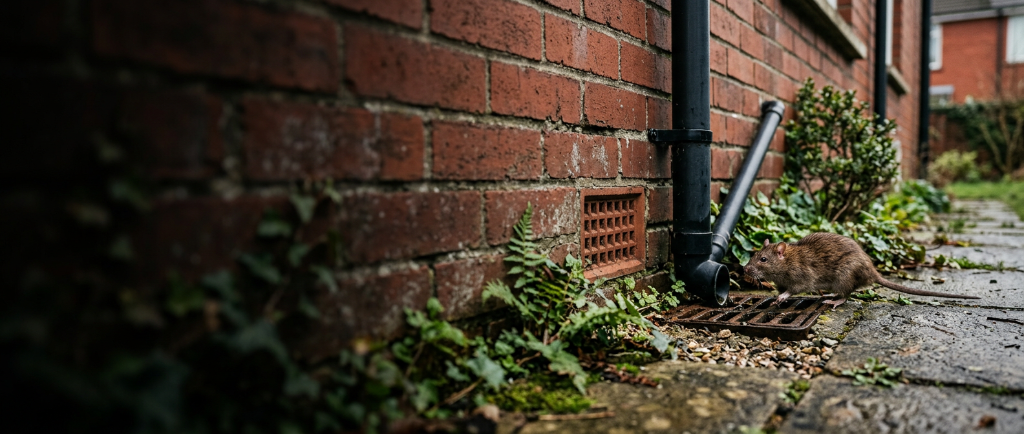
Pests are opportunists. Rats and mice enter homes in search of warmth, food, and nesting material. They do not need much space to get in. A brown rat can squeeze through a gap the size of a 50p coin. A mouse can pass through a hole no bigger than a pencil. Cockroaches thrive in heat and moisture, making kitchen units, boilers, and pipe runs their preferred environment. Wasps build nests in quiet, undisturbed cavities such as lofts, wall voids, and eaves.
South Wales has a mild, damp Atlantic climate, and a high proportion of older terraced housing across Cardiff, Newport, and Swansea. This combination, ageing brickwork, older drainage, and frequent damp, makes properties in the region particularly susceptible to rodent ingress and moisture-loving pests such as cockroaches. Pest activity follows predictable seasonal cycles closely tied to temperature and breeding patterns. Understanding when pests are most active gives homeowners a significant advantage when it comes to prevention.
Seasonal Pest Prevention: What to Watch for and When
Spring (March to May)
Spring is when pest activity begins to accelerate. Temperatures rise, food sources become more available, and many pests come out of dormancy or begin their breeding cycles.
What to watch for: Rats and mice that have been sheltering through winter will become more active and exploratory. Queen wasps emerge from hibernation around March and April and begin scouting for nest sites. This is the single most important window to address roof, loft, and eave access points. Finding and blocking a potential nest site now is far more effective than dealing with a fully established colony in August.
Prevention priorities:
- Inspect the roofline and eaves for gaps and openings
- Check that airbricks and vents are intact and not blocked
- Clear any winter debris from the garden, including log piles and leaf accumulation, which provide ideal shelter for rodents
- Inspect compost bins and ensure they are sealed
- Check perimeter fencing and gate gaps at ground level
Summer (June to August)
Summer is peak season for wasp activity, flying ant colonies, and cluster flies. It is also the period when food left outdoors, in bins, or in warm kitchens attracts the widest range of pests.
What to watch for: Wasp nests reach full capacity between June and August, with colonies containing thousands of workers. Cockroach activity increases significantly in warm, humid kitchens. Flies are more active and can carry pathogens into food preparation areas. Ants follow scent trails into kitchens in search of sweet food sources.
Prevention priorities:
- Keep bin lids tightly sealed and bins away from the property if possible
- Store all food in sealed containers or the fridge
- Clean behind and underneath kitchen appliances regularly
- Ensure window and door screens are in good repair
- Do not leave pet food out overnight
- Check for wasp entry points under roof tiles and in airbricks
Autumn (September to November)
Autumn is arguably the most critical season for rodent prevention. As temperatures drop, rats and mice actively seek warm shelter and food. This is when properties that are not properly proofed see a sharp spike in rodent incursions, and it is one of the busiest periods of the year for pest controllers across Cardiff and the wider South Wales area.
What to watch for: Brown rats will move from outdoor environments, fields, drains, and gardens into buildings. Mice, which are more agile climbers than most people realise, can enter through roof-level gaps, gaps around pipes, and defects in soffits and fascias. Squirrels become more active in loft spaces as they forage and cache food.
Prevention priorities:
- Inspect all external pipework, drainage runs, and utility entry points for gaps
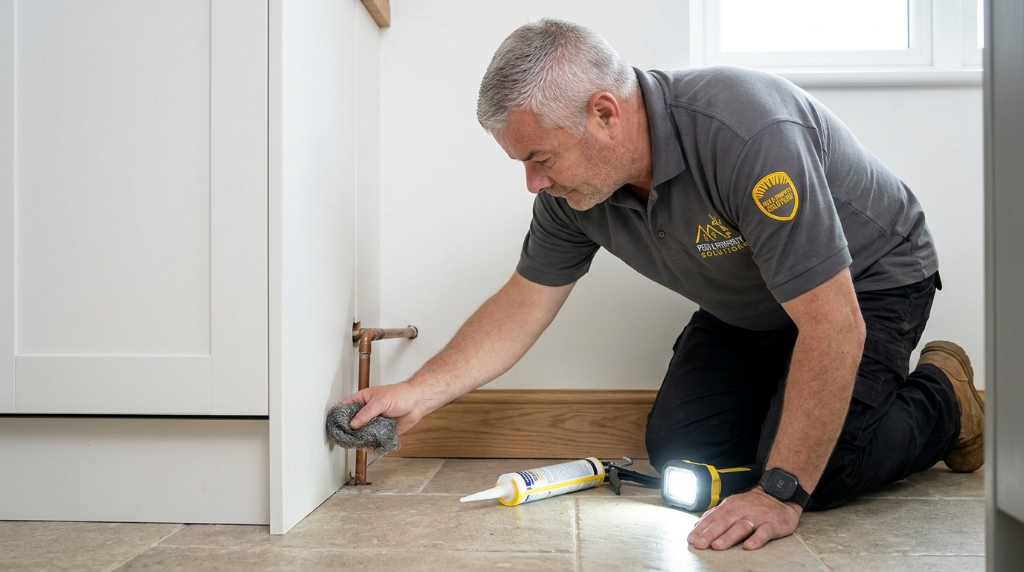
- Seal holes around incoming pipes with wire wool and expanding foam
- Check gutters and downpipes are in good condition, as broken pipes at ground level provide access
- Clear fallen fruit from the garden promptly, as it attracts both rodents and wasps
- Lift and check decking and sheds for signs of burrowing
Winter (December to February)
In winter, most outdoor pest activity slows, but rodent pressure on structures intensifies. Any gap that provides warmth will be exploited. It is also a good period to review and carry out any structural repairs before spring activity resumes.
What to watch for: Roof rats and house mice are the primary concerns. Cockroaches in heated properties remain active year-round. Cluster flies can enter loft spaces in large numbers, seeking overwintering sites.
Prevention priorities:
- Inspect roof spaces and loft hatches for signs of entry
- Check external walls, particularly around old pipe runs and where different materials meet
- Ensure cavity wall insulation is not providing a nesting corridor between breaches
- Ensure all food waste is disposed of properly and regularly
Room-by-Room Pest Prevention Guide
Kitchen
The kitchen is the room most commonly targeted by pests. It provides food, water, warmth, and shelter, which is everything a pest needs to establish itself.
Prevent rats and mice in the kitchen: Rodents can access kitchens through gaps around pipework under sinks, through wall cavities, and via poorly fitted kickboards. Check the space beneath your sink unit carefully. Any gap around the incoming cold water pipe or the waste outlet is a potential entry point. Fill small gaps with wire wool pushed firmly into the hole, then seal over with exterior-grade silicone or expanding foam. Wire wool alone is not enough as it can be pulled free; the combination is what creates a durable barrier.
Store dry goods such as cereals, rice, pasta, and pet food in hard-sided, sealed containers. Cardboard boxes and plastic bags are not pest-proof. Clean behind the fridge and oven regularly. Crumbs and spilled cooking fat are significant attractants. Do not leave washing up sitting overnight.
Prevent cockroaches in the kitchen: Cockroaches in UK homes are most commonly the German cockroach, a small species that thrives in warm, humid kitchens. German cockroaches prefer to shelter in narrow gaps close to warmth, such as behind the motor housing of the fridge, inside the body of the oven, and in the void behind kitchen wall units. They are nocturnal, meaning a single cockroach spotted during the day usually indicates a sizeable population already in place. Prevention centres on denying them harbourage: seal gaps around pipework, ensure kitchen units sit flush with the wall, fix any leaking pipes or taps, and deep clean behind and underneath all appliances quarterly.
Bathroom and Utility Room
Bathrooms and utility rooms attract pests primarily through moisture. Leaking pipes, poor ventilation, and damp conditions provide the conditions cockroaches and silverfish thrive in.
Fix all plumbing leaks promptly. Ensure bathroom extractor fans are working and are used after showers and baths to reduce humidity. Check the seals around the bath and shower. Any moisture penetrating floor or wall surfaces creates a pathway for pests as well as the damp conditions they prefer.
Check the space behind and beneath the washing machine and tumble dryer. The warmth they generate makes this area attractive for nesting. Inspect the conduit or cavity where the washing machine inlet and outlet pipes pass through the wall. Fill any gaps with expanding foam or silicone sealant.
Loft and Roof Space
The loft is the most frequently overlooked area of a home from a pest prevention perspective, and often the first place pests establish a presence.
Prevent rats, mice, and squirrels in the loft: Inspect the roofline from the outside. Look for missing, cracked, or displaced roof tiles. Check where the soffit boards meet the fascia, and look for any gaps at the eaves. Mortar or pointing that is crumbling at the top of the gable walls is a common entry point, particularly in the older terraced housing common across Cardiff and Newport. From inside the loft, look for droppings, chewed insulation, gnaw marks on joists, or nesting material. Blocking roof-level entry points requires working at height, so this is one area where a professional may be the safest option.
Prevent wasps in the loft: Check the loft in late April and May for early queen wasp activity. A queen investigating or starting to build a nest will be visible as an individual large wasp. At this stage, the nest can be dealt with far more easily than in July when it reaches full size. Look for early nest construction in the corners of the roof structure, along the ridge board, and in undisturbed insulation.
Living Room and Bedrooms
Rodents can access living areas through gaps under skirting boards, around fireplace hearths, and through suspended floor voids accessed via air bricks. Bed bugs are the primary concern in bedrooms, typically introduced through second-hand furniture or travel, rather than through property defects.
For general rodent prevention, check that all skirting boards and architraves fit flush with no gaps at floor level. If you have a fireplace, ensure the flue is capped when not in use. An uncapped chimney is a direct access route into the property for birds, squirrels, and occasionally rats.
Garden and Outbuildings
The garden is often the origin of pest pressure on the main property. Addressing it is as important as interior prevention.
Prevent rats in the garden: Rats are commonly found in gardens near compost heaps, bird feeders, overgrown vegetation, and decking. They burrow under sheds, paving slabs, and raised planters. Store compost in a sealed bin rather than an open heap. If you use a bird feeder, use a tray to catch fallen seed and clear it daily. Lift decking panels periodically and inspect the ground beneath. Keep vegetation trimmed back from the property's external walls to remove climbing cover.
Prevent wasps in garden structures: Check garden sheds, summerhouses, and outbuildings regularly from March onwards. Wasps frequently nest in roof cavities of outbuildings, under eaves, and inside garden furniture cushion storage boxes. Early inspection and deterrence is far easier than late-season nest removal.
Advice for Landlords: Legal Responsibilities and Best Practice
For landlords in England and Wales, pest control is not simply a matter of good property management practice. It intersects directly with legal obligations under Section 11 of the Landlord and Tenant Act 1985, the Housing Act 2004, and the Homes (Fitness for Human Habitation) Act 2018. Landlords in Wales also have duties under Part 4 of the Renting Homes (Wales) Act 2016, which has required rented dwellings to be fit for human habitation since 1 December 2022.
Under the Homes (Fitness for Human Habitation) Act, a property must be free from hazards that pose a serious risk to the health and safety of occupants. Pest infestations, particularly rodent infestations, can constitute such a hazard. Tenants now have the right to take landlords to court if a property is not fit for habitation, which includes unresolved pest problems the landlord has been notified about.
Landlord responsibilities at the outset of a tenancy:
Before any new tenancy begins, the property should be inspected for signs of pest activity. Any active infestation must be treated and resolved before the tenancy begins. Structural defects that could allow pest entry should be rectified. Document this work carefully.
During a tenancy:
Establish clearly in the tenancy agreement who is responsible for pest control under which circumstances. The general principle is that structural defects that allow pest access are the landlord's responsibility to rectify. Infestations arising from tenant behaviour are generally the tenant's responsibility. Landlords should respond promptly to pest-related maintenance requests.
HMOs and Houses in Multiple Occupation:
In HMOs, the responsibility for pest prevention and control rests almost entirely with the landlord. Communal areas must be maintained, waste facilities must be adequate, and the structure must be properly proofed. HMO licensing conditions, including those operated by Cardiff Council and other South Wales local authorities, routinely include requirements around pest management.
Best practice for landlords:
- Commission a professional property inspection annually as part of your maintenance schedule
- Ensure all kitchen pipework, external walls, and roof structures are properly sealed
- Provide adequate waste management facilities for tenants
- Act promptly on any reports of pest activity
- Keep records of all pest-related inspections and treatments
How to Identify an Infestation Early
The earlier a pest problem is identified, the easier and cheaper it is to resolve. Knowing what to look and listen for gives you a significant advantage.
Signs of rats or mice
Droppings along walls, under sinks, in cupboards, or in the loft. Gnaw marks on food packaging, cables, structural timbers, or pipe insulation. Greasy smear marks along walls where rodents run consistently. Scratching or scurrying noises, particularly at night. Burrow holes in gardens, particularly near compost heaps, decking, or walls.
Signs of wasps
A persistent stream of wasp activity entering and exiting a fixed point in the building. A low humming sound within a wall cavity or ceiling void. Visible papery nest material in a loft or outbuilding.
Signs of cockroaches
Droppings resembling coffee grounds or black pepper, particularly behind appliances. A musty, oily smell. Discarded shed skins. Egg cases, small brown capsule-shaped objects, hidden in dark crevices. Cockroaches seen in daylight, which indicates an established population.
Signs of bed bugs
Small rust-coloured spots on bedding or mattress seams from droppings. Tiny eggs or shed skins in mattress tufts or bed frame joints. Bites on the skin appearing in clusters or lines, typically on exposed areas.
When to Call a Professional
Pest prevention is something any homeowner can manage with the right knowledge and consistency. But there are situations where professional intervention is the right call.
You should contact a qualified pest controller if you have confirmed rodent activity inside the building structure, not just in the garden. A wasp nest inside a building is always better handled professionally due to the risk of provocation and sting reactions. A cockroach infestation that has progressed beyond the early stage requires professional treatment using residual insecticide products not available to the public. Any infestation in a property with vulnerable occupants, including young children, elderly residents, or immunocompromised individuals, warrants professional involvement.
Quick Reference: Pest Prevention Checklist
External checks (twice yearly, spring & autumn)
- Inspect all external pipework entry points for gaps
- Check roofline, soffits, fascias, and eave boards for gaps
- Inspect airbricks and vents for damage
- Check drains and inspection chambers for covers and condition
- Clear vegetation away from external walls
- Inspect garden sheds and outbuildings for nest sites
- Seal any gaps around cables, wires, or aerial feeds
Internal checks (quarterly)
- Inspect under sinks for gaps around pipework
- Check behind and under kitchen appliances
- Inspect loft space for signs of activity
- Check all food is properly stored in sealed containers
- Ensure no standing water or persistent moisture
- Inspect basement or cellar access points if applicable
Key takeaways
- Pests need food, water, warmth and shelter. Deny any one of them and you remove the invitation.
- Most entry points are structural: gaps around pipework, broken air bricks, deteriorating pointing and damaged roof soffits. Sealing these is the single highest-value job.
- Prevention is seasonal. Rodents push indoors through autumn and winter, while wasps and flying insects peak in summer.
- Older Cardiff and South Wales housing stock, especially Victorian and Edwardian terraces, needs closer attention around drainage and brickwork.
- Act on the first signs. Droppings, gnaw marks, smears or a musty smell mean the problem is already established, and that is the point to call a professional.
Frequently Asked Questions
What is the most common pest in UK homes?
The brown rat and the house mouse are the most commonly reported pest problems in UK domestic properties. Both are year-round concerns, with activity peaking in autumn and winter as temperatures drop and rodents seek indoor shelter.
How do I prevent rats from entering my home?
The most effective way to prevent rats entering your home is to seal all potential entry points. Check gaps around external pipework, drainage connections, gaps under doors, and any cracks in external render or brickwork. Rats can enter through holes as small as a 50p coin. Use wire wool packed firmly into gaps and sealed with expanding foam or exterior silicone. Remove food sources from the garden and keep waste bins sealed.
How do I know if I have mice or rats?
The main differences are size and location of signs. Mouse droppings are small, around 3 to 6mm long, pointed at both ends, and often found in kitchen cupboards or behind appliances. Rat droppings are larger, around 10 to 20mm, and are typically found along walls, under floorboards, or in loft spaces. Rats are also more likely to burrow, whereas mice tend to nest within structures.
Are landlords responsible for pest control?
Generally yes, where the infestation is related to a structural defect that the landlord is responsible for maintaining. Landlords are legally required to ensure properties are fit for human habitation, which includes freedom from hazards posed by pests. However, infestations arising from tenant behaviour may fall under the tenant's responsibility. Tenancy agreements should clarify responsibilities clearly.
How do I prevent wasps nesting in my house?
The best prevention is to block likely nest sites before the spring. Inspect eaves, loft vents, airbricks, and roof-level gaps in late March and April when queen wasps begin scouting for sites. Mesh over any open vents and fill cracks in render or pointing. Hanging fake wasp nests can act as a deterrent in some cases, though results are inconsistent.
Can I prevent cockroaches myself?
You can take significant preventative steps yourself, including sealing pipework gaps, deep cleaning the kitchen, fixing damp issues, and removing harbourage points. However, if cockroaches are already established, professional treatment with residual insecticides is generally required. Over-the-counter sprays rarely eliminate a cockroach population and can scatter the insects further through the property.
What time of year are pests worst in South Wales?
Autumn is typically the worst period for rodent incursions as rats and mice seek indoor warmth. Summer is the peak season for wasps and flying ants. Cockroaches are active year-round in heated properties. Bed bugs can be introduced at any time of year, typically through travel or second-hand furniture.
Is pest prevention covered by home insurance?
Standard home insurance policies do not typically cover pest infestations or the cost of pest control. Some specialist policies or home emergency cover add-ons may include pest control as a benefit, but you should check the terms carefully. Prevention remains the most cost-effective strategy.
Spotted a Problem? Don't Wait.
The longer a pest issue goes unaddressed, the harder and more expensive it becomes to resolve. Whether you have seen the signs of an infestation or simply want to make sure your home or rental property in Cardiff or South Wales is properly protected, getting the right advice early is always the smartest move.
We cover Cardiff, Newport, Swansea, Bridgend, the Vale of Glamorgan, and the wider South Wales area. All work is carried out by NPTA-certified technicians.
![[Professional headshot of Gareth Davies, branded uniform, plain or on-site background]](https://media.base44.com/images/public/6a030ac59700caa462b5b7c5/a28541072_gareth-caricature-rat-rifle-solid-black-bg.png)
Written by
Gareth Davies
Owner of Pest & Property Solutions
Gareth owns and runs Pest & Property Solutions. He sets the service standards, leads on inspections and complex jobs, and makes sure every customer gets practical, honest advice.
Expertise: Rodent control, Commercial pest control, Drain surveys and RatGate systems, Property inspections, Prevention and proofing
View full profile