
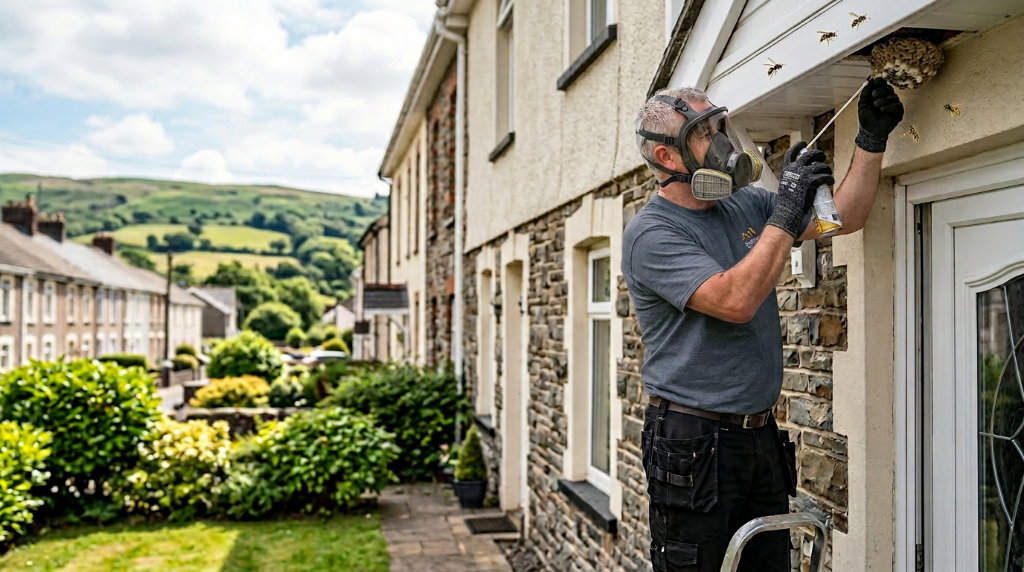
Every summer, thousands of UK homeowners discover an unwanted guest on their property, a wasp nest. What starts as a few wasps flying around the garden can quickly turn into a full-blown infestation, with nests hiding in lofts, wall cavities, sheds, and garden borders.
The good news is that wasp nest prevention is possible, and knowing what to look for makes all the difference. This guide covers everything you need to know: how wasps behave, where they build nests, the warning signs to watch for, and the practical steps you can take to keep them away from your home.
Understanding Wasp Nesting Behaviour
Wasps in the UK are most active between late spring and early autumn, with populations peaking between July and September. The two species you are most likely to encounter are the common wasp (Vespula vulgaris) and the German wasp (Vespula germanica).
Each colony begins with a single queen who emerges from hibernation in early spring. She finds a suitable location, builds a small starter nest from chewed wood pulp, which gives the nest its distinctive papery appearance, and lays her first batch of eggs. As the colony grows through spring and early summer, worker wasps take over construction, expanding the nest rapidly. By midsummer, a mature nest can house anywhere from 3,000 to 10,000 wasps.
Wasps do not reuse old nests. Each new queen starts fresh each year, which means a site that held a nest last season can become home to a new colony the following summer if conditions remain attractive.
Where Wasps Like to Nest in the UK
Wasps are opportunistic nesters. They look for sheltered, undisturbed spaces with easy access to the outside. Common nesting locations include:
Inside the home
- Loft spaces and roof voids
- Wall cavities and cavity wall insulation
- Under floor joists
- Behind fascia boards and soffits
Outside the home
- Garden sheds and outbuildings
- Under decking and patios
- Inside compost bins
- In dense hedgerows, shrubs, and tree stumps
- Underground burrows in garden soil
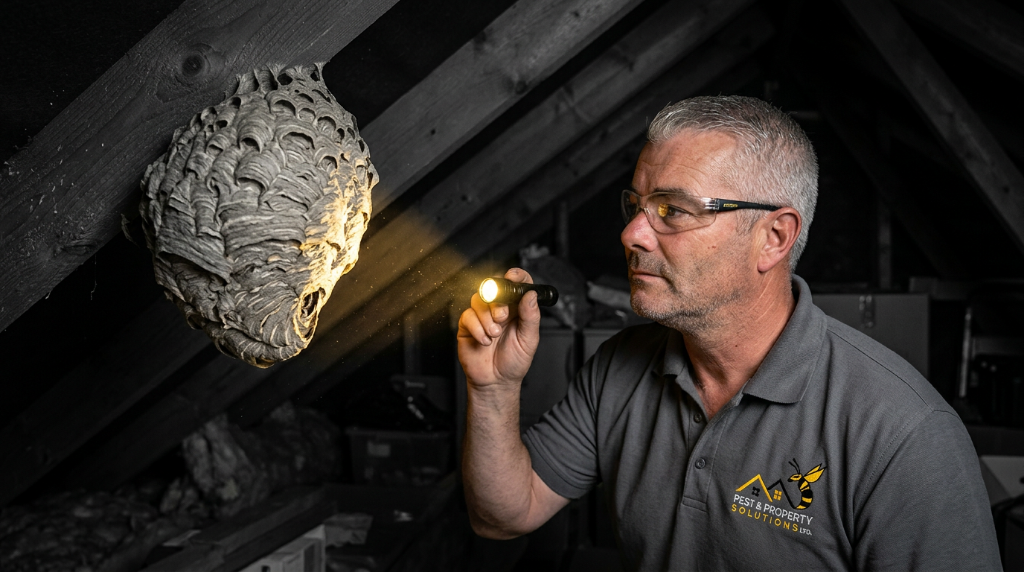
Wasps in lofts are among the most commonly reported issues in UK homes, largely because roof spaces are dark, quiet, and well-protected from the elements. If you notice wasps entering or leaving through a gap in your roofline, soffit, or fascia, there is a strong chance a nest is developing inside.
Signs You Have a Wasp Nest
Spotting a nest early gives you more options and reduces the risk of a serious wasp infestation. Watch out for:
How To Prevent Wasps Nesting Around Your Home
Wasp nest prevention works best when you address the conditions that attract them in the first place. Here are the most effective steps to take.
Seal Entry Points
Carry out a thorough inspection of your home's exterior each spring before wasp season begins. Look for:
- Gaps around fascia boards, soffits, and guttering
- Cracked mortar or missing brickwork pointing
- Holes around pipes and cables entering the building
- Damaged roof tiles or loose flashing
- Gaps in shed walls, window frames, and door surrounds
Use exterior-grade filler, mortar, or mesh to seal any openings you find. Even small gaps, large enough for a wasp to squeeze through, are potential nesting sites.
Reduce Attractants in the Garden
Wasps are drawn to sweet food sources, protein, and water. To make your garden less appealing:
- Keep bin lids firmly closed and clean bins regularly to remove food residue
- Clear up fallen fruit from trees promptly
- Avoid leaving uncovered sweet drinks outside, especially sugary fizzy drinks and fruit juice
- Clean up after outdoor meals immediately
- Keep compost bin lids secured and avoid adding sweet food waste to open heaps
- Fix any leaking taps or outdoor water sources, as wasps seek water in hot weather
Maintain Your Garden and Outbuildings
Overgrown hedges, dense shrubs, and neglected outbuildings create ideal nesting conditions. Keep garden areas tidy and check sheds, log stores, and outbuildings regularly. Inspect underneath decking and patios in early spring when queens are scouting for nest sites.
Check Your Loft Early in the Season
A quick loft inspection in April or May can catch a developing nest before it grows. Look for small papery structures in corners, around roof timbers, or near insulation. At this early stage, the nest will be small (roughly golf-ball sized) and far easier and safer to manage than one discovered in July or August.
Use Deterrents With Caution
Some homeowners try commercial wasp traps or decoy nests. Traps can help reduce foraging wasps in specific areas such as outdoor dining spaces but will not eliminate a nest. Decoy nests have limited scientific backing. Neither replaces professional treatment for an active infestation.
The Risks of DIY Wasp Nest Removal
It might be tempting to deal with a wasp nest yourself, especially if it appears small. However, DIY removal carries serious risks that should not be underestimated.
Professional pest controllers use appropriate protective equipment, specialist insecticides, and proven treatment methods that eliminate the nest safely and effectively. For any active nest, particularly one inside a structure, professional removal is always the safer and more reliable option.
When To Call a Professional
You should contact a pest control professional if:
- You have located an active nest inside your home, loft, or a wall cavity
- The nest is large (larger than a tennis ball)
- Someone in your household has a wasp allergy or has reacted badly to stings before
- The nest is in a location that puts children, pets, or vulnerable people at risk
- DIY treatment has not worked or has made the situation worse
- You are unsure whether what you are seeing is a wasp nest
A professional treatment is typically quick, effective, and far less distressing than attempting to handle it yourself.
Frequently Asked Questions
When is wasp nesting season in the UK?
Wasps begin nesting in early spring, typically from March or April when queen wasps emerge from hibernation. Nests grow through summer and colonies are at their largest between July and September. Activity dies down in autumn as the colony reaches the end of its life cycle.
Do wasps come back to the same nest each year?
No. Wasps do not reuse old nests. Each queen starts a fresh nest in spring. However, if a location was attractive to one queen, it may attract another the following year, so sealing previous entry points is important.
Can I remove a wasp nest myself?
It is not recommended. Disturbing an active nest puts you at serious risk of multiple stings and, in some cases, a severe allergic reaction. DIY treatments are also frequently ineffective. Professional removal is the safest option.
How do I know if wasps are nesting in my loft?
Look for wasps entering or leaving through gaps in your soffit, fascia, or roof tiles. You may also hear a faint buzzing in the ceiling or find wasps inside the upper floors of your home. A loft inspection in early spring can catch a developing nest early.
What attracts wasps to my garden?
Wasps are attracted to sweet food and drink, protein sources such as meat and fish, fallen fruit, uncovered bins, and water. Reducing these attractants makes your garden significantly less appealing to foraging wasps.
Are wasp nests dangerous if left alone?
A nest left in a low-risk area and well away from people may not pose an immediate danger early in the season. However, by midsummer, a mature colony can be highly aggressive if disturbed. Nests inside homes or frequently used outdoor spaces should always be treated professionally.
How much does professional wasp nest removal cost?
Costs vary by location and nest accessibility but typically range from £50 to £150 for a standard treatment. Many pest control companies offer a guarantee, returning if the nest remains active after initial treatment.
Can I prevent wasps from nesting in my loft?
Yes. The most effective method is sealing all entry points around your roofline, fascia boards, soffits, and tiles in early spring before queens begin scouting for nest sites. A physical inspection of your loft in April or May is also worthwhile.
Got a Wasp Problem? Don't Leave It Until It Gets Worse.
Whether you have spotted the early signs of a nest or you are already dealing with a full-scale wasp infestation, professional help is just a call away. Our experienced team covers Cardiff and South Wales, offering fast, effective wasp nest treatment that keeps your home and family safe.
![[Professional headshot of Gareth Davies, branded uniform, plain or on-site background]](https://media.base44.com/images/public/6a030ac59700caa462b5b7c5/a28541072_gareth-caricature-rat-rifle-solid-black-bg.png)
Author
Gareth Davies
Owner of Pest & Property Solutions
Gareth owns and runs Pest & Property Solutions. He sets the service standards, leads on inspections and complex jobs, and makes sure every customer gets practical, honest advice.
Expertise: Rodent control, Commercial pest control, Drain surveys and RatGate systems, Property inspections, Prevention and proofing
View full profileReviewed by
Sion JenkinsSenior Technician, Cardiff. Solar Panel Bird Proofing Specialist
View reviewer profile