
Quick answer
A rat blocker is a one-way flap fitted inside a drain pipe, usually at the inspection chamber. Water and waste flow out; a rat swimming up from the sewer meets a closed flap and cannot pass. It is a sound, long-term fix when the drain run between the blocker and your house is intact. On a damaged run it can make the problem worse.
Introduction
You have seen a rat in the back yard twice this month, or something has been gnawing under the kitchen floor. A drainage firm has been out, put a camera down and told you the drain "flows fine". Someone has mentioned a rat blocker, and you want to know whether that is the end of it.
Most of the time it can be. Rats in South Wales terraces live in the sewer and come up where the pipework lets them. Close the route and you close the problem. The catch is the word "where". A blocker only closes the route if it sits on the sewer side of every fault, and that is the part people skip.
This guide explains how a non-return valve works, when it is the right answer, the three drain conditions where fitting one is a mistake, and what a proper drain rat survey checks before anything is bolted in.
How does a rat blocker for drains work?
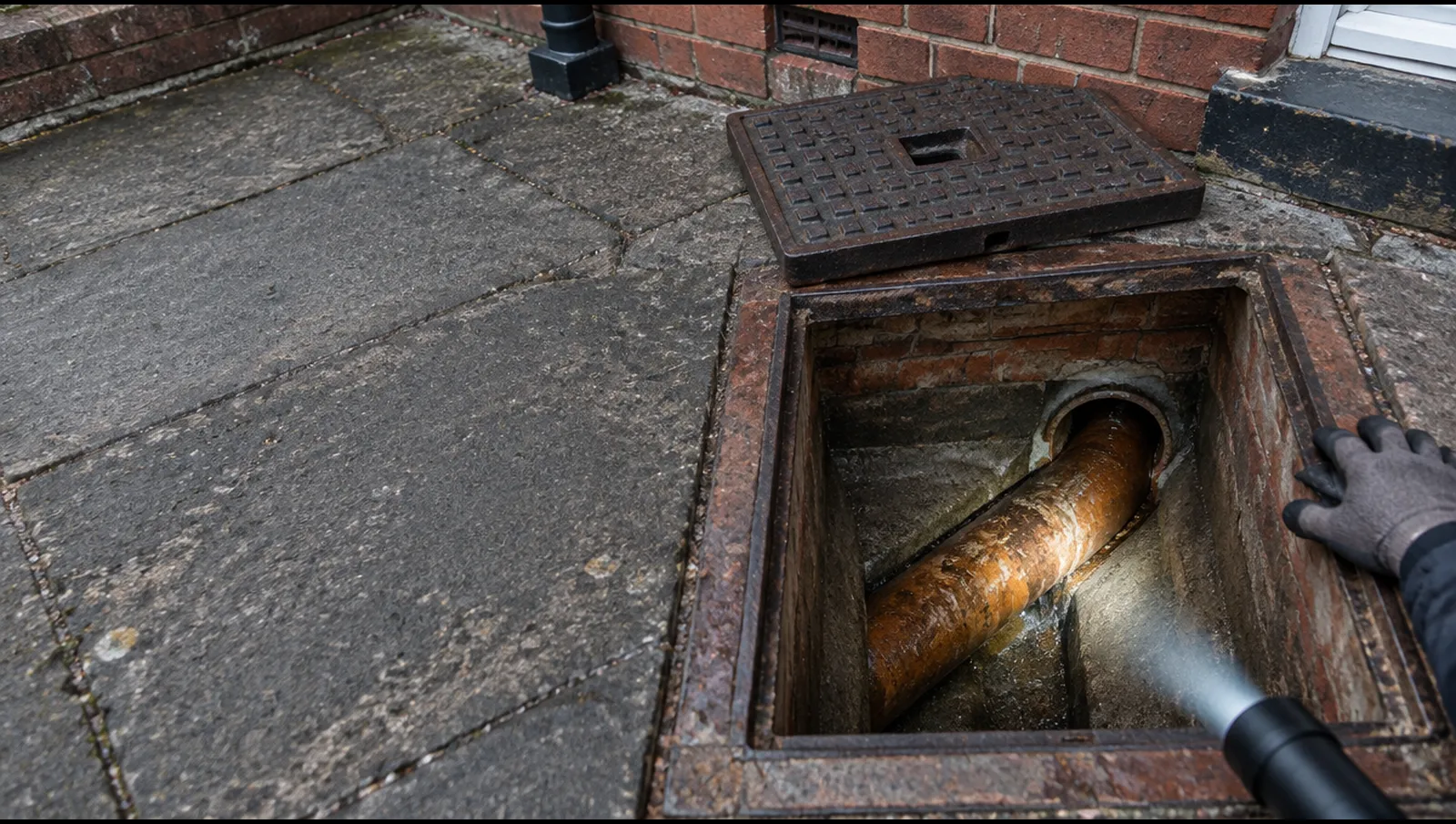
A rat blocker is a stainless steel sleeve with a hinged flap that fits inside the outlet of a drain, most often in the inspection chamber nearest the house. The flap opens with the flow of water leaving the property and swings shut behind it. A rat coming up from the public sewer swims against the flow, reaches the closed flap and has nowhere to go.
It works because of two things rats cannot change. They can swim long distances through a sewer, but they cannot open a flap that is hinged against them, and they cannot chew through stainless steel. Fitted correctly on a sound run, a blocker turns your private drain into a dead end from the sewer side.
The one we fit is a RatGate, sized to the pipe diameter, fixed in the chamber outlet and tested with water before we leave. See our drain rat protection service for how we install it.
Why do rats use the drains in the first place?
Because the drains are the oldest thing under the house. Much of Cardiff's terraced housing in Canton, Roath, Grangetown and Splott sits on clay drainage laid before the First World War. Clay pipes are strong but brittle. Over a century of ground movement, tree roots and heavy traffic, joints shift, sections crack and the occasional run collapses. Every one of those faults is a door from the sewer into the ground under your home.
Once a rat is out of the pipe and into the sub-floor void, it is a short climb to the kitchen kickboards, the airing cupboard or the loft. That is why a rat problem that starts in the drain so often shows up as noise under the floor first. We cover the full route in How Do Rats Get Into a House? The 7 Entry Points We Find Most in South Wales.
Is a rat blocker the right fix for your drain?
It depends on one question: is the run between the blocker and the house intact? If yes, a blocker is the right fix and one of the best value jobs in pest control. If no, the blocker goes in only after the fault is repaired, or it goes in a different chamber.
Here is the decision in one table.
| What the survey finds | Right answer | Why |
|---|---|---|
| Sound run, rats entering from the sewer | Fit a rat blocker | Closes the only route, no repeat treatments |
| Displaced joint or crack upstream of the chamber | Repair first, then fit the blocker | A blocker below the fault traps rats on the house side |
| Collapsed section or root ingress | Excavate or reline, then review | No blocker survives a collapsed pipe |
| Redundant pipe left open (old outside toilet, removed sink) | Cap the pipe | The open end is the door, not the main run |
| Rats entering above ground, drain sound | Proofing, not a blocker | The drain was never the route |
Bait on its own is not on the table above for a reason. Rodenticide kills the rats that are here. It does nothing about the ones that will use the same gap next week, and every treatment adds risk for pets, children and wildlife that a sealed drain never does. Professional use of rodenticides in the UK falls under the rodenticide stewardship regime, which expects non-chemical options such as proofing to be considered before any bait goes down.
The three drain conditions where a blocker makes it worse
This is the part that goes wrong most often, usually when a blocker has been fitted from a product listing without a camera survey. Three conditions turn a blocker from a fix into a trap.
1. A displaced joint between the blocker and the house. Rats already in the run, or coming in through the joint from the surrounding ground, now have a sealed pipe behind them and your sub-floor in front of them. They cannot return to the sewer, so they dig out sideways through the fault. The blocker has not stopped the rats. It has moved them indoors.
2. A second connection you did not know about. Many Cardiff terraces share a rear drain run with the neighbour, and older properties carry redundant branches from an outside toilet or a demolished scullery. A blocker in your chamber does nothing for a branch that joins below it or an open pipe end in next door's yard.
3. A run that is already partly collapsed or root-bound. Flow slows, solids build up behind the flap, and the flap stops closing cleanly. Now you have a blockage risk and a blocker that no longer blocks. The repair had to come first.
What does a drain rat survey check before a blocker is fitted?
A drain rat survey asks a different question from a drainage survey. A drainage company checks that the pipe flows. We check whether a rat can get out of it. Both are legitimate; they are simply not the same job. Our full explanation is in Rats In Drains: Why A Drain Survey Is Not A Rat Survey.
Before any blocker goes in, the run should be worked through like this:
- Lift every chamber. Not just the nearest one. Trace the private run from the house to the public sewer connection and note every branch.
- Camera the pipe, not just rod it. Rodding clears a blockage and tells you nothing about joints. A CCTV pass shows displaced joints, cracks, root ingress and any connection that should not be there.
- Look for rat evidence in the chamber. Smear marks on the benching, droppings on the ledges, and greasy run marks at the pipe mouth show rats are using this chamber, not just the sewer.
- Check for redundant pipework. Old outside-toilet stubs and capped-off sinks are the classic open door in a Cardiff terrace yard.
- Confirm the house side is sealed. Airbricks, pipe entries and the sub-floor void get a walk-round, because a sealed drain is wasted if rats can walk in at ground level.
- Then specify. Blocker, repair then blocker, cap, or proofing. Written down, with the reasons, before anything is fitted.
If you would like the drain traced before anyone fits anything, book a survey and we will tell you plainly which of the five answers you need.
Myth: a clean CCTV report from a drainage company means rats cannot be using the drain. Reality: "flows fine" means water is getting away. A displaced joint that lets a rat out can leave flow unaffected, and a rat does not need a defect to be in your private run in the first place; it only needs one to get out of it. The drainage report is useful. It is not a rat survey.
Warning signs that rats are coming up the drain
Rats using the drain rather than an above-ground route leave a particular pattern. Two or more of these together point at the pipework:
- Droppings or smear marks on the benching when you lift the inspection cover
- Noise under the ground floor rather than in the loft, especially after rain
- A rat seen in the yard close to a chamber or gully, with no bins or bird food nearby to explain it
- Activity that returns a few weeks after a baiting treatment
- A neighbour with the same problem on a shared run
Autumn is when this pattern shows most. Heavy rainfall pushes water through old sewers, flushes rats into private runs and up towards the surface, and the first cold nights send them looking for a dry void.
Prevention: keeping the route closed once it is fixed
A blocker is low maintenance, not no maintenance.
- Have the flap checked periodically, and straight away if activity returns
- Keep the inspection chamber accessible, not paved or decked over
- Do not pour fat down the sink; grease is what stops a flap closing cleanly
- Keep bird food and compost off the ground near the chamber so the yard stops being worth a visit
- Mesh airbricks and seal pipe entries so a sealed drain is backed by a sealed house
The Ultimate Pest Prevention Guide For UK Homes covers the full walk-round for a South Wales home.
When to call a professional
Fit-it-yourself blockers exist, and on a brand new sound run they may work. The problem is that you cannot know the run is sound without lifting every chamber and putting a camera down it, and that is where DIY stops. Fitting a blocker on an unsurveyed drain is the one way to turn an outdoor rat problem into an indoor one.
Call us if any of these apply:
- You have rats indoors or under the floor and nobody has traced the drain
- A blocker was fitted and the activity carried on or got worse
- Your property is a pre-war terrace with a paved yard and you have never seen inside the chamber
- You are a landlord or agent with a tenant reporting rats; the duty to keep the home fit to live in usually sits with you, and a written survey is your record
We survey, repair where needed, fit the blocker and check it afterwards, across Cardiff and South Wales. See our rat control service for the wider job.
Key takeaways
- A rat blocker is a one-way flap in the drain outlet: water out, rats not in.
- It is the right fix only when the run between the blocker and the house is intact.
- Three conditions rule it out until repaired: a displaced joint upstream, an unknown second connection, a collapsed or root-bound section.
- A drainage report that says "flows fine" is not a rat survey.
- Survey with a camera, lift every chamber, then decide: blocker, repair then blocker, cap, or proofing.
Frequently asked questions
Do I need a rat blocker in my drain?
Only if rats are using the drain to reach your property and the run between the chamber and the house is sound. A camera survey settles both questions. If the run is damaged, the repair comes first and the blocker second; if rats are getting in above ground, proofing is the answer instead.
How does a drain rat blocker work?
It is a stainless steel sleeve with a hinged flap, fitted in the drain outlet at the inspection chamber. Water flows out and pushes the flap open. A rat swimming up from the sewer meets the closed flap and cannot pass or chew through it. On a sound run it closes the route permanently.
Can a rat blocker make a rat problem worse?
Yes, if it is fitted below a fault in the pipe. Rats already in the run or entering through the fault are sealed off from the sewer and dig out sideways into the ground under the house. That is why the run should be camera surveyed and any fault repaired before a blocker goes in.
Does a rat blocker stop the drain working?
A correctly sized blocker on a sound drain does not affect flow. Problems come when fat and solids build up on a slow or partly collapsed run and stop the flap closing. Have the flap checked at follow-up and keep grease out of the sink.
Why does Cardiff have so many drain rat problems?
Much of the city's terraced housing sits on clay drainage laid before 1914. A century of ground movement and roots has left displaced joints and cracks that connect the sewer to the ground under homes. Autumn rainfall pushes rats up through those faults, which is why calls rise from October.
Get the drain traced first
Book a drain rat survey and get a fixed quote before any work starts. Call 02922 404605 or book online.
About the author
Gareth Davies is the owner of Pest & Property Solutions and a BPCA member, covering Cardiff, Newport, Swansea and South Wales.

Written by
Gareth Davies
Owner of Pest & Property Solutions
Gareth owns and runs Pest & Property Solutions. He sets the service standards, leads on inspections and complex jobs, and makes sure every customer gets practical, honest advice.
Expertise: Rodent control, Commercial pest control, Drain surveys and RatGate systems, Property inspections, Prevention and proofing
View full profile