
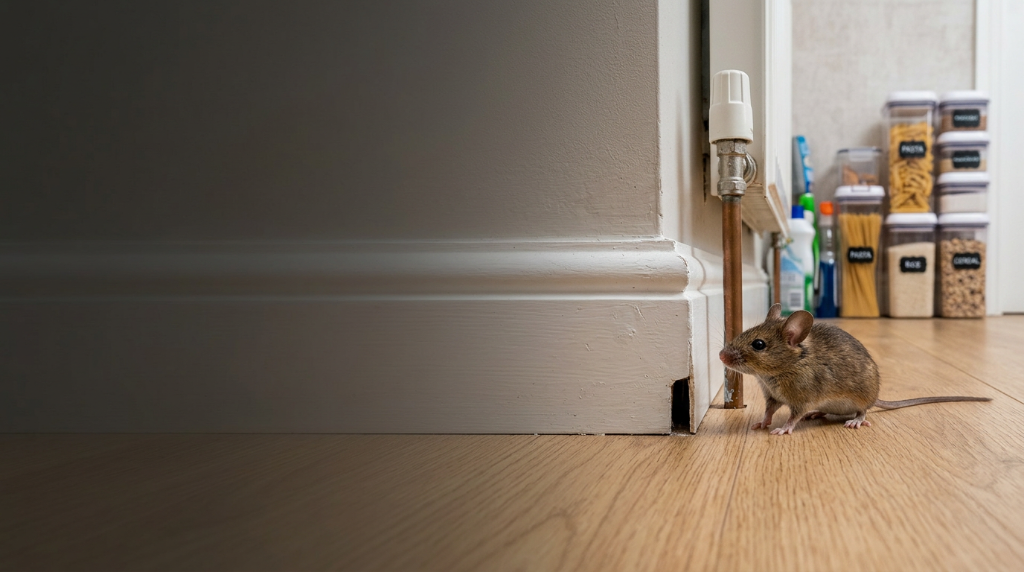
Hearing scratching sounds at night? Found droppings in the kitchen? You might have a rodent problem, but knowing what you are dealing with makes a real difference to how you handle it.
Rats and mice are both common pests in homes, businesses, and gardens across Cardiff and South Wales, but they behave differently, cause different levels of damage, and require different approaches to control. Getting the identification right from the start saves time, money, and stress.
This guide breaks down everything you need to know about rats vs mice, from how they look and where they hide, to the health risks they carry and how to prevent them from settling in.
Quick Answer: How to Tell Rats and Mice Apart
The easiest way to tell a rat from a mouse is size. Rats are significantly larger, with thicker bodies, blunter snouts, and smaller ears relative to their head size. Mice are small, light, and delicate-looking, with large ears, a pointed snout, and a thin tail.
Rats vs Mice: Full Comparison Table
| Feature | Brown Rat | House Mouse |
|---|---|---|
| Body length | 20 to 27cm (plus tail) | 6 to 10cm (plus tail) |
| Weight | 300 to 500g | 15 to 30g |
| Colour | Brown or grey, paler belly | Grey-brown, cream belly |
| Snout | Blunt and rounded | Pointed and triangular |
| Ears | Small relative to head | Large relative to head |
| Eyes | Small | Large and prominent |
| Tail | Thick, scaly, shorter than body | Thin, lightly hairy, as long as body |
| Droppings | 12 to 20mm, blunt-ended | 3 to 6mm, pointed ends |
| Dropping shape | Banana or capsule-shaped | Smooth, rice-grain-shaped |
| Urine smell | Strong, ammonia-like | Musky |
| Lifespan | 1 to 2 years | 1 to 1.5 years |
| Litter size | 6 to 12 pups | 4 to 16 pups |
| Litters per year | Up to 5 | Up to 10 |
Visual Descriptions
What Does a Rat Look Like?
The most common rat in the UK is the brown rat (Rattus norvegicus). It has a stocky, heavy-set build with coarse brown or grey-brown fur and a paler underside. The body measures around 20 to 27cm, with a thick, scaly tail slightly shorter than the body. The head is broad and blunt with small ears set close to the head. Up close, rats look distinctly larger and more robust than mice, many describe them as almost cat-like in their confidence.
Key visual identifiers:
- Heavy body, thick neck
- Blunt snout
- Small ears set close to the head
- Short, thick, scaly tail
- Broad feet
What Does a Mouse Look Like?
The house mouse (Mus musculus) is small, slim, and agile with a pointed snout, large ears, and a thin tail roughly equal to its body length. Its fur is dusty grey-brown on top with a cream or white belly. Mice can squeeze through gaps as small as 6mm, roughly the diameter of a pencil. A house mouse body is roughly the length of your thumb.
Key visual identifiers:
- Slim, delicate body
- Pointed, triangular snout
- Large ears relative to head
- Large, dark eyes
- Long, thin tail with fine hair
Droppings: The Most Reliable Identification Clue
Droppings are often the first evidence of rodent activity and the most reliable way to confirm what species you have.
Rat droppings
Dark brown to black, roughly 12 to 20mm long, with a blunt or slightly tapered end. Often described as resembling a dark olive stone or a small pellet. Most likely found along walls, near food sources, and around entry points.
Mouse droppings
Much smaller, around 3 to 6mm, with pointed ends. They look similar to a grain of dark rice. Mice produce far more droppings than rats, sometimes up to 80 per day, so large clusters of tiny droppings are a strong indicator of mouse activity.
Where Rats and Mice Are Found in Cardiff and South Wales Properties
Where Rats Are Commonly Found
Rats prefer ground level. They burrow underground, nest in overgrown gardens, and are frequently found in drainage systems, beneath decking, and inside wall cavities. Rat populations tend to be highest in dense urban areas, central Cardiff, Newport, and Swansea see consistent rat activity due to older drainage systems, terraced housing, and food waste.
- Beneath garden decking or sheds
- In drainage systems and sewers
- Behind kitchen units and appliances
- Inside wall cavities
- Compost heaps and overgrown borders
- Commercial bins and waste areas
Where Mice Are Commonly Found
Mice are excellent climbers and are frequently found at height. Mice in loft spaces are extremely common across South Wales, particularly during autumn and winter when they seek warmth.
- Loft and roof spaces
- Behind kitchen cupboards and under units
- Inside wall cavities
- Around boilers and hot water cylinders
- Beneath floorboards
- Inside airing cupboards
- Storage areas with cardboard boxes
Behaviour: How Rats and Mice Differ
Understanding behaviour helps you interpret what you are seeing and hearing.
| Behaviour | Rats | Mice |
|---|---|---|
| Activity period | Mainly nocturnal | Mainly nocturnal, but bolder in daylight |
| Caution level | Naturally cautious (neophobic) | Curious and exploratory |
| Travel range | Up to 300m from nest | Rarely more than a few metres |
| Burrowing | Yes, frequent | Rarely |
| Climbing | Moderate | Excellent climbers |
| Gnawing | Heavy, can gnaw through wood and pipework | Regular, focus on softer materials |
| Food preference | Cereals, meat, fish, opportunistic | Cereals, seeds, grains |
| Water needs | Need access to water daily | Can survive on moisture from food |
| Response to traps | Cautious, may avoid new objects | Curious, quicker to investigate bait |
Rats are neophobic by nature, meaning they are suspicious of anything new in their environment. This is why a newly placed trap may be ignored for several days. Mice, by contrast, are exploratory and tend to investigate new objects quickly.
Signs of Infestation
Signs of a Rat Infestation
- Droppings along skirting boards, near food, or beside walls
- Burrow entrances in gardens, often near structures or walls
- Gnaw marks on wood, cables, plastic pipes, and soft masonry
- Greasy smear marks along walls and joists where rats travel regularly
- Strong ammonia smell from urine
- Scratching or scurrying sounds in walls or beneath floors at night
- Damage to stored food in packaging or bins
- Footprints in dusty areas, showing five-toed hind prints
Signs of a Mouse Infestation
Mouse infestations often go undetected for longer because mice are smaller and quieter. Look for:
- High volumes of tiny droppings in drawers, cupboards, and along skirting boards
- Scratching sounds in the loft or wall cavities, especially at night
- Gnaw marks on food packaging, wiring, and soft furnishings
- Nesting material made from shredded paper, insulation, or fabric
- Musky smell in enclosed spaces
- Smear marks at low level along walls
- Footprints in dusty areas, smaller and lighter than rat prints
Health Risks: Rats vs Mice
Both species pose genuine health risks and should be treated seriously. Neither should be managed casually.
Health Risks from Rats
Weil's disease (Leptospirosis)
Contact with rat urine, particularly in water
Rat-bite fever
Bite, scratch, or contact with contaminated food
Salmonella
Contamination of food or surfaces
Toxoplasma
Contact with rat faeces
Fleas and ticks
Carried on rats, can transfer to pets and humans
Structural fires
Rats gnawing electrical cables
Health Risks from Mice
Salmonella
Contamination of food or food preparation surfaces
Listeria
Contamination of food
Hantavirus
Inhalation of dried urine or droppings (rare in UK)
LCM virus
Contact with saliva, urine, or droppings
Asthma and allergies
Mouse allergens in urine, dander, and droppings
Electrical damage and fire
Mice gnawing cables and wiring
Mouse allergens are an under-reported issue in UK homes. Research has linked exposure to mouse allergens with worsening symptoms in people who already have allergic asthma. If anyone in your household has respiratory issues and you suspect a mouse infestation, getting it resolved quickly is worthwhile.
Prevention Methods: Keeping Both Out
Prevention is far more cost-effective than treatment. The entry points and attractions are largely the same for both species.
Seal Entry Points
- Block gaps around pipes, cables, and vents with steel wool and caulk or expanding foam
- Replace damaged air bricks with steel mesh-covered versions
- Seal gaps around windows, doors, and roofline
- Check for gaps where walls meet the floor in older properties
- Inspect around utility entry points, including gas and water
Remove Food and Water Sources
- Store food in sealed, rigid containers (not plastic bags)
- Empty pet food bowls overnight
- Keep bird feeders off the ground and use rodent-resistant models
- Secure compost bins with solid bases and tight lids
- Clear fallen fruit from the garden promptly
- Fix dripping taps and standing water sources
Manage Your Garden and Exterior
- Keep grass short and borders tidy
- Remove clutter, timber piles, and debris from garden areas
- Lift decking if possible, or create a sealed base beneath it
- Avoid leaving black bags of waste on the ground overnight
- Check around drains and gullies for signs of burrowing
Maintain Your Property
- Repair damaged roofline, soffits, and fascias
- Check loft insulation regularly for signs of disturbance
- Keep drains clear and in good repair
- Inspect cavity walls periodically, particularly in older properties
When to Call a Professional
DIY solutions can work for minor mouse activity caught early. For rat infestations, established mouse problems, or any infestation in a commercial property, professional pest control is the right call.
You should contact a professional if:
- You have found a burrow or confirmed rat activity
- The infestation is inside the fabric of the building (walls, loft, under floors)
- There are multiple sighting points suggesting a large population
- You have used traps or baits without success after two weeks
- There is a risk to vulnerable people, children, or food preparation areas
- You are a landlord with a legal duty to ensure the property is habitable
Frequently Asked Questions
How do I know if I have rats or mice?
The most reliable indicators are the size of droppings and the location of activity. Rat droppings are 12 to 20mm long and found at low level. Mouse droppings are 3 to 6mm and often found at height, in loft spaces, or in kitchen cupboards. If you can see the animal, its size and the shape of its head are the clearest clues.
Can you have rats and mice at the same time?
It is possible but unusual. Rats will actively predate on mice, so the two species rarely coexist in the same space. If you have both, it typically indicates different zones of infestation within a large property.
Are rats more dangerous than mice?
Both carry disease and both can cause structural damage through gnawing. Rats are associated with more serious conditions such as Weil's disease, and their gnawing tends to be heavier and more destructive. However, mouse infestations are often underestimated, particularly the link to asthma and respiratory issues.
What time of year are rodent infestations most common in South Wales?
Autumn and winter are peak periods. As temperatures drop, rodents move indoors seeking warmth and food. Mice in loft spaces become particularly common between October and February. That said, rats can be active year-round, especially in urban areas of Cardiff and Newport.
Do rats come up through toilets?
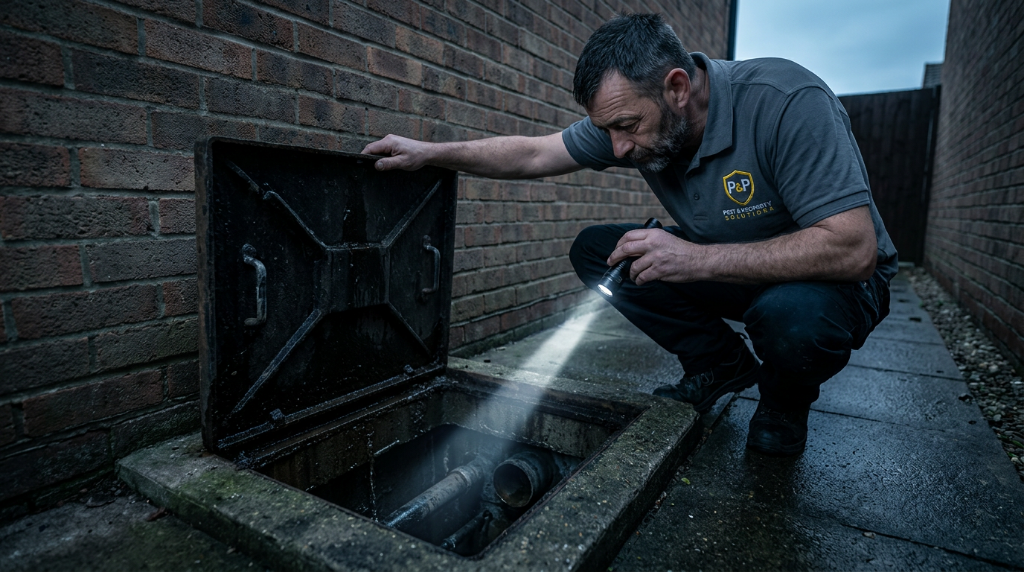
Yes, although it is rare. Brown rats are strong swimmers and can navigate drainage systems. Properties with damaged or poorly sealed drainage are at greater risk. If you notice rat activity near drains or have had unexplained scratching near bathrooms, it is worth having the drainage inspected.
How quickly can a rodent infestation grow?
Very quickly. A pair of mice can produce a large number of offspring within a few months under the right conditions, and rats can have several litters a year of up to 12 pups each. Early intervention is always more effective and less expensive than dealing with an established infestation.
Is it illegal to not deal with a rat infestation in a rental property?
Under the Homes (Fitness for Human Habitation) Act 2018 and the Housing Act 2004, landlords in England and Wales have a legal obligation to ensure properties are free from pests that make them unfit for habitation. Failure to act can result in legal action from tenants. Scotland and Northern Ireland have equivalent legislation.
Can I deal with rats myself?
Snap traps and bait stations can be effective for small, contained rat activity. However, professional rodenticides are more effective, particularly for established infestations, and rats are notoriously cautious around new items in their environment. For any confirmed rat infestation inside a building, professional pest control is strongly recommended.
Spotted the Signs? Do Not Wait.
Rodent infestations move fast. What starts as a few droppings in a cupboard can become a full infestation within weeks. Whether you have confirmed rats, suspect mice, or are simply not sure what you are dealing with, Pest & Property Solutions can help. We offer honest advice, fast response times, and professional treatment across Cardiff and South Wales.
![[Professional headshot of Gareth Davies, branded uniform, plain or on-site background]](https://media.base44.com/images/public/6a030ac59700caa462b5b7c5/a28541072_gareth-caricature-rat-rifle-solid-black-bg.png)
Written by
Gareth Davies
Owner of Pest & Property Solutions
Gareth owns and runs Pest & Property Solutions. He sets the service standards, leads on inspections and complex jobs, and makes sure every customer gets practical, honest advice.
Expertise: Rodent control, Commercial pest control, Drain surveys and RatGate systems, Property inspections, Prevention and proofing
View full profile