
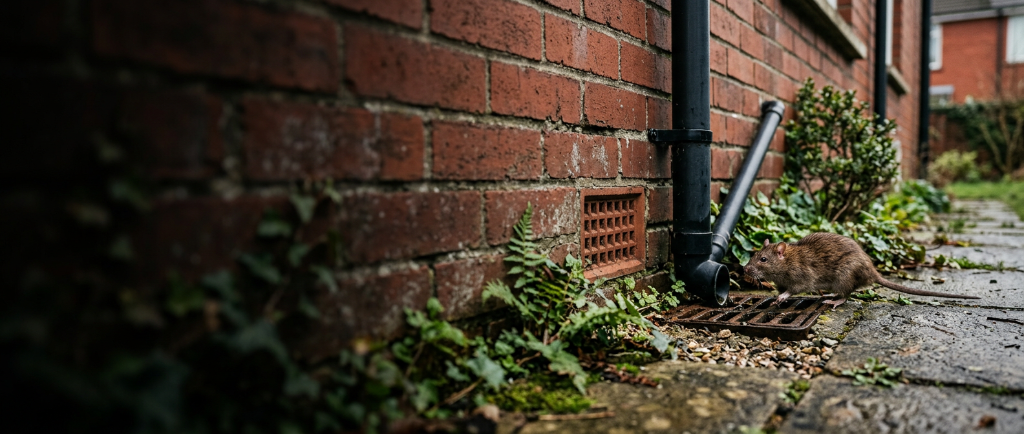
As temperatures drop across Cardiff and South Wales, rats and mice do not simply disappear. In fact, winter is the time when rodent activity in and around homes increases significantly. If you have noticed scratching sounds in your walls, droppings in your kitchen, or gnawed food packaging in your cupboards, you are probably dealing with a winter rodent problem.
This guide explains exactly why rodents become more active during the colder months, how they get into your home, and what you can do right now to protect your property with effective winter rodent prevention.
Every autumn, pest controllers across South Wales see a sharp rise in rodent call-outs. The reason is simple: when the temperature outside falls, rats and mice look for the same things we do: warmth, shelter, and food.
Why Rodents Are More Active in Winter
Rats and mice are not hibernators. Unlike hedgehogs or bats, they stay active all year round. But winter changes their behaviour in a meaningful way. The cold weather outside reduces their food sources, makes open ground hostile, and drives them to seek out warm, sheltered environments.
They Are Seeking Warmth
The core body temperature of a rat or mouse needs to stay stable. When outdoor temperatures drop below around 5 to 10 degrees Celsius, the effort required to stay warm outside becomes unsustainable. Warm buildings, particularly those with cavity walls, loft spaces, and underfloor voids, become prime targets. South Wales has a mild but damp Atlantic climate, and the combination of older housing stock and consistent winter rainfall across Cardiff, Newport, and Swansea makes warm, dry indoor spaces especially attractive to rodents.
Food Scarcity Drives Them Closer to Humans
Natural food sources: seeds, insects, plant matter, become much harder to find in winter. Rats and mice are highly intelligent foragers and they quickly identify where reliable food is available: your kitchen, your bins, your garage, your compost heap. Once they find a food source, they establish a route back to it every day.
They Are Breeding
Contrary to popular belief, rodents do not stop breeding in winter. A female rat can produce several litters per year, each containing a number of pups. A pair of rats entering your home in October can become a significant infestation by January. The warmth of a home actually supports year-round breeding, which is why early winter rodent prevention is far more effective than a reactive approach.
Your Home Offers Everything They Need
Rodents look for three things: food, water, and shelter. A typical home provides all three. Central heating keeps indoor temperatures warm and consistent, food is readily available, and there are plenty of quiet, undisturbed spaces to nest, from roof timbers to the gaps behind kitchen units.
How Rodents Get Into Your Home
Understanding entry points is central to any effective winter rodent prevention strategy. Rats and mice are far more agile than most people realise.
- A rat can squeeze through a gap the size of a two-pence coin (roughly 20mm)
- A mouse can get through a gap as small as a pencil-width (around 6 to 7mm)
- Rats are strong swimmers and can enter via drainage systems
- They can climb rough vertical surfaces, scale pipes, and traverse cables
- Gaps around service pipes, air bricks, and poorly fitted doors are common entry points
Common entry points in homes across Cardiff and South Wales include:
- Gaps around boiler flue pipes and utility cables entering the building
- Damaged or missing air bricks and ventilation covers
- Gaps beneath external doors and garage doors
- Cracks in the foundations or brickwork, particularly common in older terraced housing
- Old or damaged drainage systems
- Roof edges, soffits, and fascias in poor condition
- Loft hatches that do not close properly
Signs You Have a Winter Rodent Problem
Catching a rodent problem early is important. The longer an infestation is left, the harder and more expensive it becomes to resolve. Here are the key signs to look for.
- Droppings near food storage areas, cupboards, or along skirting boards
- Scratching or scurrying sounds in walls, ceilings, or under floorboards, particularly at night
- Gnaw marks on food packaging, wooden beams, cables, or pipe insulation
- Grease marks or dark smears along walls where rodents regularly run
- Nesting material such as shredded paper, fabric, or insulation
- A distinctive ammonia-like smell in enclosed spaces
- Damage to stored items in lofts, garages, or outbuildings
If you notice any of these signs, act quickly. Contact a professional rodent control specialist for an assessment before the population grows.
Winter Rodent Prevention Checklist
The most effective approach to winter rodent prevention is a combination of proofing your home against entry, removing attractants, and monitoring for early signs. Work through this checklist before the cold weather arrives.
External Proofing
- Inspect the full external perimeter of your building for gaps and cracks
- Seal any gaps around pipes, cables, and service entries with wire wool and sealant
- Replace or repair damaged air bricks with rodent-proof mesh covers
- Fit bristle strip or draught excluders to external doors and garage doors
- Check roof edges, soffits, and fascias for damage or rot
- Ensure loft hatches close flush and leave no gap at the edges
- Clear away wood piles, rubble, and overgrown vegetation from the perimeter
- Check the condition of your drain covers and inspection chambers
Internal Prevention
- Store all food in sealed, hard-sided containers, not bags or cardboard
- Empty kitchen bins daily and use bins with secure lids
- Clean behind and under kitchen appliances regularly
- Remove clutter from garages, lofts, and utility rooms
- Check under sinks for gaps around pipework and seal with steel wool
- Repair any dripping taps or condensation issues that could provide water
- Keep compost bins at least five metres from the building if possible
Garden and Outbuildings
- Keep bird feeders tidy and sweep fallen seed regularly
- Secure outbuilding doors with rodent-resistant seals
- Move compost bins away from the house and use enclosed models
- Avoid leaving pet food outdoors overnight
- Cut back hedges and shrubs close to the house
Loft and Insulation: A Rodent Hotspot
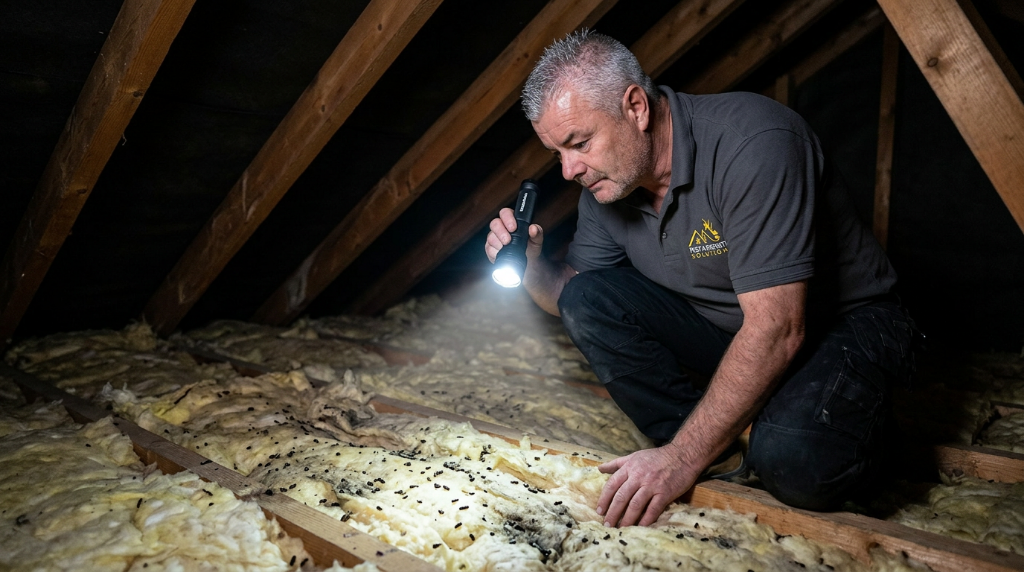
Lofts are one of the most common places for rats and mice to nest in winter. They offer warmth from the roof and rising heat, undisturbed space, and often plenty of soft material for nesting. Mineral wool and foam board insulation are particularly attractive, as rodents use these materials for their nests.
Why Lofts Are So Vulnerable
Most loft conversions and boarded loft spaces have multiple access points: around eaves, at ridge tiles, through gaps in the gable end, and via improperly sealed cable and pipe runs. Older properties are especially susceptible, as materials degrade and small gaps open up over time. This is particularly relevant across Cardiff and the Vale of Glamorgan, where Victorian and Edwardian terraced housing is common.
Protecting Your Loft from Rodents
- Have your loft space inspected at least once a year, particularly in autumn
- Check for droppings, nesting material, and gnaw marks in the loft regularly
- Ensure all cables, pipes, and ducts entering the loft are fully sealed
- Consider fitting rodent-resistant insulation or laying it beneath a boarded floor
- Fit a rodent-proof cover to any external ventilation in the eaves
- If you store items in the loft, keep them in solid plastic boxes rather than cardboard
Insulation Damage
Rodents can cause significant damage to loft insulation. They tunnel through it, compress it, contaminate it with urine and droppings, and use it to build nests. Damaged insulation loses its thermal performance and can become a health risk. If you discover rodent damage to loft insulation, it should be assessed and potentially replaced once the infestation has been resolved.
Winter Rodent Risks Across Cardiff and South Wales
Rodent pressure is not uniform, and certain areas and property types create higher risk for homeowners across the region.
- Urban areas of Cardiff, Newport, and Swansea see the highest levels of rat activity, particularly properties close to older drainage infrastructure, allotments, or takeaway premises.
- Rural properties in the Vale of Glamorgan, Monmouthshire, and the Brecon Beacons foothills, near farmland and grain storage, are commonly targeted by both rats and mice during harvest season and throughout winter.
- Older housing stock, Victorian and Edwardian terraces in particular, common across Cardiff, Newport, and Swansea, tends to have more structural vulnerabilities due to age and historic drainage systems.
- Coastal and estuary areas around Cardiff Bay, Barry, and Penarth face additional risk from the brown rat, which is a proficient swimmer and frequently uses drainage systems as travel routes.
- Properties with detached outbuildings, garages, or annexes often provide the first staging post before rodents move into the main house.
Whatever your location across South Wales, the combination of older housing, dense urban fabric, and seasonal cold and damp creates ideal conditions for rodent activity from October through to March.
When to Call a Professional Pest Controller
DIY rodent control using traps or bait can be a useful first line of defence for minor issues. But there are clear situations where professional intervention is the right call.
- You have seen live rats or mice inside your home
- You are finding droppings in multiple locations
- You hear regular scratching sounds, especially at night
- DIY traps have not resolved the issue within a week or two
- You suspect rodents in the loft, walls, or under the floorboards
- You have a business or rental property with a legal duty of care
A qualified pest controller will conduct a full survey, identify entry points, place professional-grade bait or traps in appropriate locations, and provide a follow-up visit to assess the results. They will also advise on proofing works to prevent re-entry.
For severe or persistent infestations, a three-visit treatment programme is typically recommended, with proofing works carried out between visits.
Frequently Asked Questions
Why are rats more active in winter in the UK?
Rats do not hibernate, so they remain active throughout winter. However, the cold weather reduces outdoor food sources and makes exposed environments hostile. This drives rats to seek warmth, shelter, and reliable food supplies inside buildings. Homes with central heating, food storage, and structural entry points offer ideal conditions for rats throughout the colder months.
What time of year do mice come indoors?
Mice typically begin to move indoors from late September and October, as temperatures begin to drop. Activity peaks between November and February. However, mice can enter properties at any time of year if conditions are favourable. A warm, food-rich environment with easy access will attract mice regardless of the season.
How do I know if I have rats or mice in my home?
The key differences are in the size of the evidence. Rat droppings are roughly 12 to 18mm long and banana-shaped. Mouse droppings are smaller, around 3 to 6mm, and more numerous. Rats tend to leave grease marks along their regular runs. Mice are more likely to be found in kitchen cupboards and food storage areas. Both will leave gnaw marks and nesting material in hidden areas.
Can rats get in through the loft?
Yes. Rats are excellent climbers and commonly enter loft spaces via gaps in eaves, damaged soffits, gaps around roof tiles, and unsealed penetrations for cables and pipes. Once in the loft, they nest in insulation and can access the rest of the property through internal voids. Loft inspections and proofing works are an important part of winter rodent prevention.
What is the best way to keep rats out of your house in winter?
The most effective approach combines three things: sealing entry points around the building exterior, removing food and water sources that attract rodents, and monitoring for early signs of activity. Focus particularly on gaps around pipes and service entries, air bricks, roof edges, and beneath external doors. If you are unsure where vulnerabilities are, a professional pest survey will identify them.
Does having a clean house prevent rats?
Cleanliness reduces attractants but does not eliminate risk entirely. Rats are driven primarily by warmth and shelter in winter, which means even a spotlessly clean property can be targeted if there are structural vulnerabilities. Proofing your home against entry is equally as important as keeping it clean and well-maintained.
Are rats dangerous to my family?
Yes. Rats pose genuine health risks. They carry diseases including Weil's disease (leptospirosis), salmonella, and hantavirus. Their droppings, urine, and shed fur can contaminate surfaces and food. Rats also gnaw electrical cables, increasing the risk of fire. If you suspect rats in your home, you should treat it as an urgent issue and seek professional help promptly.
Protect Your Property This Winter
Do not wait until you have a full infestation on your hands. If you have spotted signs of rodent activity, or if you simply want to make sure your home is properly protected before winter, our team is here to help.
![[Professional headshot of Gareth Davies, branded uniform, plain or on-site background]](https://media.base44.com/images/public/6a030ac59700caa462b5b7c5/a28541072_gareth-caricature-rat-rifle-solid-black-bg.png)
Author
Gareth Davies
Owner of Pest & Property Solutions
Gareth owns and runs Pest & Property Solutions. He sets the service standards, leads on inspections and complex jobs, and makes sure every customer gets practical, honest advice.
Expertise: Rodent control, Commercial pest control, Drain surveys and RatGate systems, Property inspections, Prevention and proofing
View full profile