
Quick answer
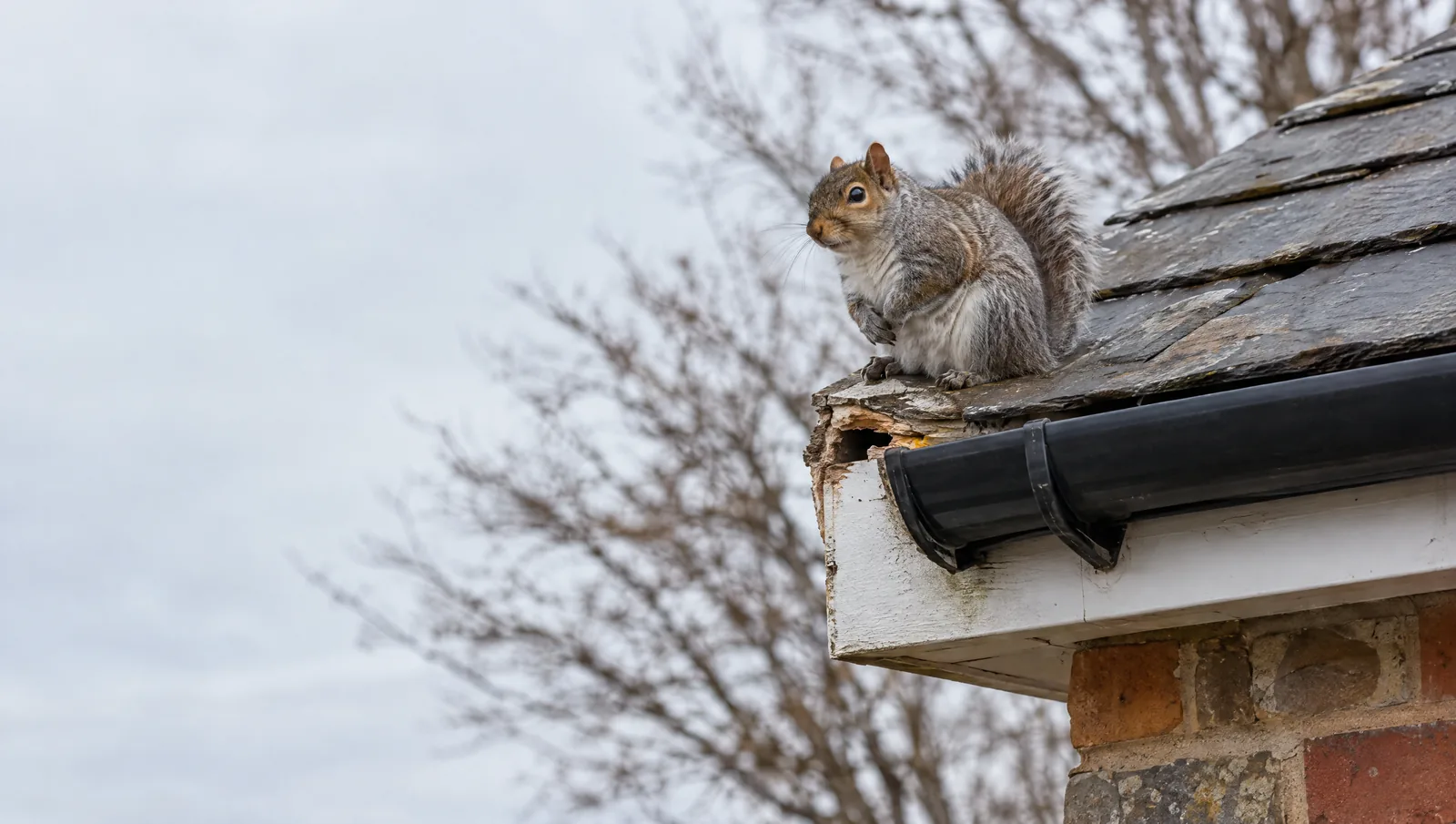
Squirrels in the loft usually announce themselves with scratching, thumping and rolling noises during the day, especially early morning and late afternoon, plus chewed timber, shredded insulation and gnawed cables. In Wales a trapped grey squirrel cannot legally be released. The safe fix is to confirm it is squirrels, deal with them humanely, then proof every entry point.
Footsteps overhead at breakfast time?
It is a grey November morning and you are making a cup of tea when something heavy runs across the ceiling. It stops, scratches, then rolls what sounds like a marble from one end of the loft to the other. By lunchtime it has gone quiet. By four o'clock it is back.
That daytime rhythm is the biggest clue you will get. This guide explains how to tell squirrels from rats and mice, what damage they do in a roof space, what the law in Wales actually allows once a grey squirrel is involved, and where DIY stops and a professional visit starts.
How do you know if you have squirrels in the loft?
Listen to when the noise happens. Grey squirrels are diurnal: the Mammal Society says they are active during the daytime, with peaks in the early morning and late afternoon. (Mammal Society) Rats and mice do most of their moving about at night. So daytime noise plus chewed cables is the squirrel signature, while scratching that only starts after dark points towards rodents. Our guide to scratching noises in the loft at night covers the night-time side in detail.
The British Pest Control Association (BPCA) lists these signs of squirrels in a property: (BPCA)
- Scratching and rustling from the loft or a wall cavity
- Droppings in the loft (a professional may be needed to identify them)
- A urine smell in the loft, which can mean the problem has been going on for a while
- Lots of squirrels around the house, especially near the roof or on high fences
- Holes in vents or damage to insulation foam
From outside, look along the roofline for a chewed corner of fascia or soffit, a gap where the gutter meets the roof edge, and squirrels running along fences or branches that reach the house.
Squirrels, rats or mice: which is in your loft?
The table below sets out the differences that matter when you are standing under the hatch.
| Clue | Squirrels | Rats | Mice |
|---|---|---|---|
| When you hear it | Daytime, peaks early morning and late afternoon | Mostly at night | Mostly at night |
| What it sounds like | Heavy running, thumps, rolling | Scurrying, gnawing, scratching | Light, quick scratching |
| Damage | Chewed fascias, soffits and timber; shredded insulation; stripped cables | Gnawed timber and pipes; burrows in insulation | Small gnaw marks; shredded paper and packaging |
| Typical way in | High up: roofline, eaves, fascia corners, vents | Low down: drains, airbricks, gaps at ground level | Small gaps at almost any height |
If you are still unsure after a few days of listening, our guide on how to tell rats from mice helps narrow it down.
What damage do squirrels do in a loft?
More than most people expect. The BPCA says squirrels gnaw on woodwork and ceilings, strip insulation from electrical wires, tear up fibreglass insulation, and can contaminate cold water tanks and the loft space with urine and droppings. (BPCA)
The cables are the part to take seriously. Wiring with the sheath chewed away and copper showing is an electrical hazard. If you find it, keep away from it and have a qualified electrician check the circuit before anyone works in the loft. Water tanks are the other concern: if there is any chance droppings or urine have reached a cold water tank, have it checked and cleaned.
When are squirrels most likely to move into a loft?
Autumn and winter. The BPCA notes that squirrel problems peak in autumn, when squirrels are looking for food, and a dry roof space is an obvious shelter as the weather turns. The Mammal Society says grey squirrels breed from mid-winter to summer and can have two litters a year, in early spring and summer. (Mammal Society)
That breeding pattern matters for timing. A squirrel that moves into your loft in November may be looking for a place to raise young in the new year, which is why dealing with it early is far simpler than dealing with it in March.
What does the law allow for squirrels in Wales?
This is where a lot of online advice goes wrong, so here it is plainly.
Grey squirrels. Natural Resources Wales (NRW) describes the grey squirrel as a species of special concern under invasive alien species legislation. (NRW) In England and Wales those rules are enforced through the Invasive Alien Species (Enforcement and Permitting) Order 2019, which applies here and names NRW as the licensing authority for Wales. (legislation.gov.uk) Grey squirrels used to be listed under the Wildlife and Countryside Act 1981 for this purpose; since 1 December 2019 that Order covers them instead. (legislation.gov.uk)
What that means in practice, according to NRW:
| You must not | What NRW says |
|---|---|
| Release a grey squirrel | "If you live trap a grey squirrel, you must not release it." |
| Keep, breed or transport one | Keeping, breeding, transport (except to facilities in the context of eradication) and allowing them to escape are prohibited |
| Cause unnecessary suffering | Trappers must be competent and use lawful and humane methods to trap and dispatch; unnecessary suffering can lead to a fine or imprisonment |
| Trap on someone else's land without permission | You must have the landowner's permission to enter their land to trap |
So the popular idea of catching a squirrel in the loft and letting it go in the woods is not legal in Wales. The government's guidance on invasive alien animals, which applies to England and Wales, also lists releasing them, keeping them and transporting them within the UK among the things you must not do. (GOV.UK)
Red squirrels. Red squirrels have full protection under Schedule 5 of the Wildlife and Countryside Act 1981, which makes it an offence to intentionally take, kill or injure one or to damage or disturb its shelter. NRW also says that where red squirrels are present, only live traps may be used. (NRW) Wales has only three significant red squirrel populations, one of them in mid Wales. (Wildlife Trust of South and West Wales) In a South Wales loft you are almost certainly dealing with a grey, but if you ever see a red, leave it alone and get advice.
Bats. If you think bats might share the loft, stop. Bats and their roosts have strict legal protection, and nothing should be disturbed until you have advice.
Poison. Do not put rat or mouse bait down for squirrels. Rodenticides are labelled for rats and mice and must only be used as the label directs; baiting a loft for squirrels puts pets, children and wildlife at risk and leaves you with a problem you cannot reach.
Can you get rid of squirrels in the loft yourself?
Some of it, yes. The prevention side is safe and worth doing:
- Trim branches that overhang the roof or touch the walls, as the BPCA recommends.
- Move anything stacked against the house that gives a climbing route to the roof.
- Stop feeding them. Bird feeders that squirrels raid draw them to the house; use squirrel-resistant feeders or move them away from the building.
- Walk round the roofline with binoculars and note chewed fascia corners, loose soffits, gaps at the gutter line and damaged vents.
Where DIY stops: blocking the hole while a squirrel is still inside. A squirrel sealed into a loft, or young left behind after the adult is shut out, will chew through something else to escape or suffer, and causing unnecessary suffering is an offence. Trapping a grey squirrel also brings the legal duties above: you cannot release it, so it must be dealt with humanely by someone competent to do so. For most households, that is the point to bring in a professional.
If you are already seeing chewed cables, contamination near a water tank or more than one squirrel, it is worth booking a wildlife management survey rather than waiting.
Local spotlight: Monmouth and the rural edge
Homes on the edge of towns like Monmouth, where gardens back on to woodland and mature trees, see more squirrel pressure than terraced town centres, simply because the squirrels live next door. Two features make a house easier to get into: branches within jumping distance of the roof, and older timber fascias and soffits that have softened with age and weather. A squirrel needs only a weak corner to start chewing, and a roofline that looks sound from the drive can have a gap behind the gutter that only shows up close.
The same pattern applies anywhere in South Wales where houses sit beside parks, river corridors or woodland, from the valleys to the edges of Cardiff and Newport.
What happens once the squirrels have gone?
Proofing and clean-up. Once the loft is clear, the BPCA advises sealing entrance holes with tightly wedged mesh or metal plates wherever possible, and a professional can help with that proofing. Repairs to softened fascias and soffits may need a roofer or joiner.
Then the loft itself. Droppings, urine and shredded nesting material in insulation are best cleared properly rather than left. Our guide to loft cleaning after rats or mice explains what a professional clear-out involves, and the same hygiene principles apply to droppings and nesting material left by squirrels. See our loft cleaning service for details.
When should you call a professional?
Call us if you can hear daytime activity in the loft for more than a few days, if you find gnawed cables or contamination near a water tank, if you think there may be young in the roof, or if you are not sure whether it is squirrels, rats, birds or bats. We will confirm what is up there, explain the legal position for your situation, and set out how the animals will be dealt with and the roof proofed, with a fixed quote before any work starts. For what to expect from an urgent visit, see emergency pest control: when to call professionals, and our South Wales seasonal pest calendar shows when squirrel activity rises through the year.
Key takeaways
- Daytime noise, peaking early morning and late afternoon, plus chewed cables is the squirrel signature; night-time scratching points to rats or mice.
- Squirrels gnaw timber, strip cable insulation, shred insulation and can contaminate water tanks.
- In Wales a trapped grey squirrel must not be released, kept or moved; it must be dealt with humanely by someone competent.
- Red squirrels and bats are strictly protected: if either might be involved, stop and get advice.
- Never block an entry hole with a squirrel or young still inside; clear the loft first, then proof.
Frequently asked questions
How do I know if it's squirrels or rats in my loft?
Listen to the timing. Grey squirrels are active in the daytime, especially early morning and late afternoon, and sound heavier, with running and thumping. Rats and mice are mostly heard at night. Squirrels also tend to get in high up, through the roofline or eaves, while rats more often get in low down through drains and airbricks.
Is it illegal to release a grey squirrel in Wales?
Yes. Grey squirrels are a species of special concern under invasive alien species rules, and Natural Resources Wales states that if you live trap a grey squirrel, you must not release it. Keeping or transporting one is also prohibited. Any trapped grey squirrel must be dealt with humanely by someone competent, without causing unnecessary suffering.
Can squirrels in the loft cause a fire?
They can create the conditions for one. The BPCA says squirrels strip insulation from electrical wires, which can leave bare copper exposed in a roof space full of timber and insulation. If you find chewed cables, keep clear and ask a qualified electrician to check the wiring before anyone works in the loft.
When do squirrels get into lofts?
Most often in autumn and winter. The BPCA says squirrel problems peak in autumn as they look for food and shelter, and grey squirrels breed from mid-winter into summer, with litters in early spring and summer. A squirrel that moves in during November may be planning to raise young in your roof.
Should I block the hole squirrels are using?
Not until you are sure the loft is empty. Blocking the hole with a squirrel or young still inside causes suffering and usually leads to more damage as the animal chews another way out. Once the loft is confirmed clear, the entry points should be sealed with tightly fitted mesh or metal plates.
Book a squirrel survey
Daytime footsteps in the loft or a chewed corner on the roofline? Our local team will confirm what is up there, explain what the law allows and give you a fixed quote before any work starts. Book a wildlife management survey, call 02922 404605, or get a free quote.
About the author
Gareth Davies is the owner of Pest & Property Solutions and a BPCA member. He sets the service standards for the team and leads inspections and complex jobs across Cardiff and South Wales.
Written by
Gareth Davies
Owner of Pest & Property Solutions
Gareth owns and runs Pest & Property Solutions. He sets the service standards, leads on inspections and complex jobs, and makes sure every customer gets practical, honest advice.
Expertise: Rodent control, Commercial pest control, Drain surveys and RatGate systems, Property inspections, Prevention and proofing
View full profile