
Quick answer
Mice move indoors in autumn because cold nights send them looking for warmth, food and somewhere to nest, and they need a gap of only about 6mm to get in. To get rid of mice in the house, confirm the signs, remove food and cover, trap the mice already inside, then seal every way in.
The heating has been on for a fortnight. Then one morning there are small black droppings in the cutlery drawer, and at night something scratches behind the kitchen kickboards. It is the same story in homes across South Wales every autumn.
The good news is that mice are predictable. They come in for the same reasons, through the same kinds of gaps, and they leave the same signs. Deal with the mice inside and the gaps they used, and the problem stops.
This guide explains why mice move in now, how to confirm it is mice, where they get into a typical South Wales house, what you can safely do yourself and when it is time to call a professional.
Why do mice come into the house in autumn?
Because the house is warmer, drier and better stocked than anywhere outside. As the nights cool and natural food thins out, mice look for shelter close to a reliable food source. A heated kitchen with a gap under the sink is exactly that.
Mice do not hibernate. The British Pest Control Association (BPCA) describes them as active all year round, so the ones that move in during October stay through the winter. Two species turn up in homes: the house mouse, which lives alongside people, and the field mouse (wood mouse), which usually lives outdoors but moves into sheds, garages and houses as the weather turns.
Timing matters because of how quickly mice breed. On BPCA figures, a female can have 5 to 10 litters a year, usually of five to seven pups, and can fall pregnant again within a day of giving birth. A few mice in October can become a settled colony by the new year.
What are the signs of mice in the house?
Droppings are the most reliable sign, and most people find them before they see a mouse. Use the table below to check what you are finding and where.
| Sign | What it looks like | Where to look |
|---|---|---|
| Droppings | Black, about the size and shape of a grain of rice; soft and moist when fresh. BPCA says one mouse can leave around 80 a day | Under the kitchen sink, around the boiler, in roof spaces, in drawers and food cupboards |
| Gnawing | Small, neat tooth marks on packaging, skirting, cables and pipes | Food cupboards, behind appliances, under floors |
| Smell | A strong, stale, ammonia-like smell that builds over time | Enclosed spaces: cupboards, under the bath, the loft |
| Noise | Light, quick scratching and scurrying, mostly at night | Behind kickboards, in ceilings and stud walls |
| Nesting material | Shredded paper, fabric or insulation in a tight ball | Behind kitchen units, in airing cupboards, in the loft |
| Smears | Faint grey-black marks along the routes mice run | Along skirting boards and around holes |
If the droppings are noticeably bigger and thicker, you may be dealing with rats. Our guide to telling rats and mice apart shows the differences side by side.
Where do mice get into a South Wales house?
Through gaps far smaller than most people expect. BPCA says mice only need a gap of 6mm, roughly the diameter of the eraser end of a pencil. Much of South Wales is Victorian and Edwardian terraced housing, from Cardiff and Newport to Swansea and the valleys, and that housing stock has five places where a 6mm gap usually hides:
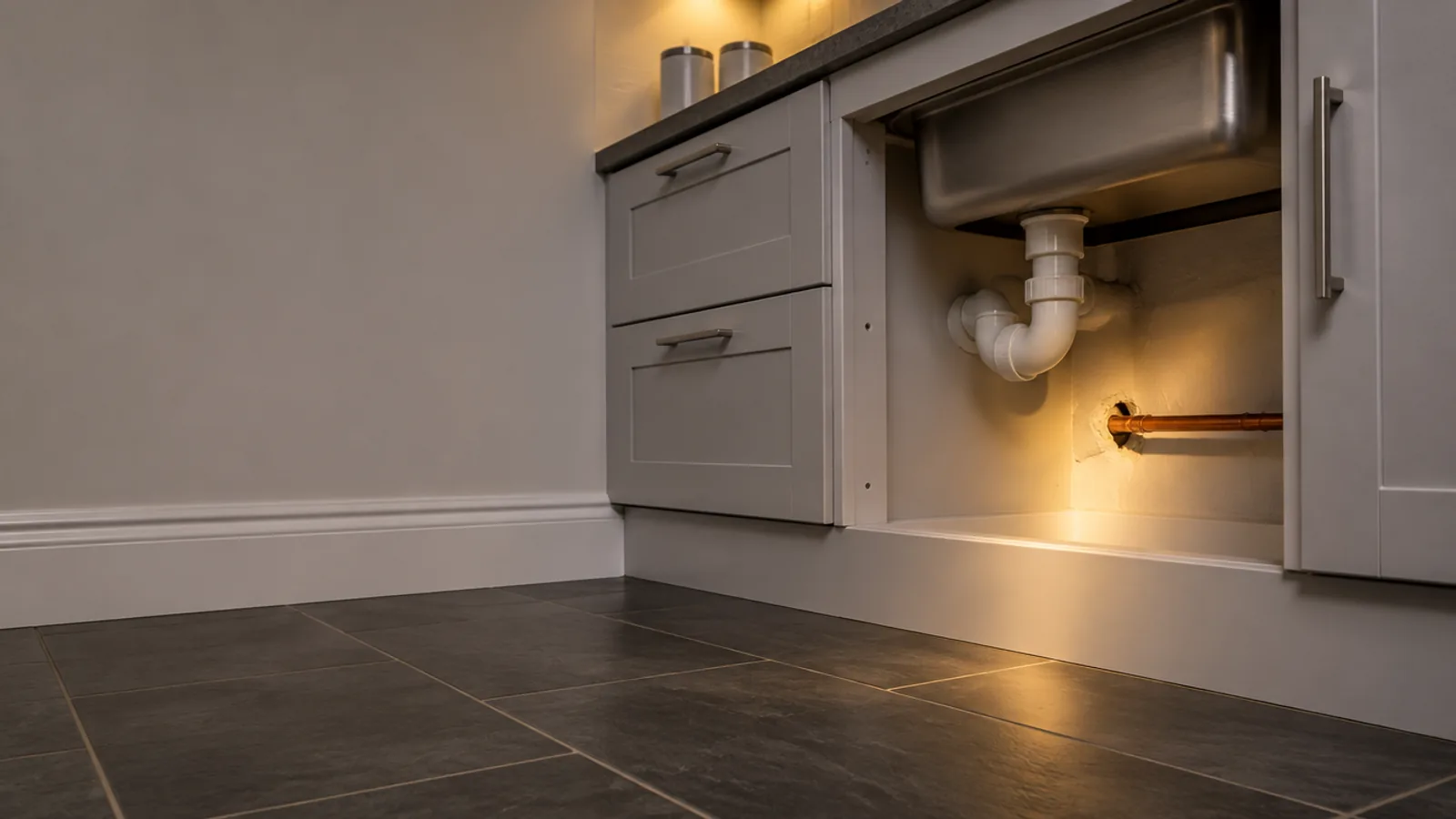
- Around pipes and cables. Where the water, waste and gas pipes come through the wall under the sink and behind the boiler, the hole is often cut bigger than the pipe and never filled.
- Airbricks with broken or missing grilles. Many older terraces have suspended timber floors ventilated by airbricks. A cracked grille gives mice the whole underfloor void as a highway.
- Under external doors. A worn threshold or a door that has dropped leaves a gap at the bottom. BPCA recommends a brush strip where the gap is larger than 4mm.
- Where an extension meets the house. The joint between a rear kitchen extension and the original wall, and the space above a lean-to roof, often has gaps at the eaves.
- Shared roof spaces and party walls. In some terraces, the loft and the wall voids connect to the neighbours, so mice can travel from house to house without going outside.
Our guide on how rats get into a house covers the same entry points from the rat side, and most of the checks overlap.
Local spotlight: Swansea's hillside terraces. In Swansea, long rows of terraces climb the hills above the city, many with rear lanes, outbuildings and back extensions added over the decades. Each addition creates another junction for a mouse to exploit, and wet Welsh weather softens mortar around pipe entries over time. A house that was sound twenty years ago can have several mouse-sized gaps today.
How do I get rid of mice in my house?
Work through five steps, in this order. Skipping the last one is the main reason mice come back.
- Confirm it is mice. Check the droppings and signs against the table above, and note every room where you find them.
- Take away food. Move dry food, cereals and pet food into sealed, hard containers. Clean up crumbs straight away, keep bin lids closed and do not leave pet bowls down overnight.
- Take away cover. Clear clutter from under the sink, the bottom of cupboards and the garage, so there is nowhere quiet to nest.
- Trap the mice already inside. BPCA suggests break-back traps baited with nutty chocolate, raisins or similar food, placed close to signs of activity and at right angles to the wall. Put them where children and pets cannot reach, check them daily and dispose of any catch safely.
- Seal the way in. Once activity has stopped, fill gaps around pipes with wire wool embedded in quick-setting cement, as BPCA recommends, fit brush strips to external doors, and replace broken airbrick grilles. Never block an airbrick completely; the underfloor needs that ventilation, so cover it with fine mesh instead.
Myth: "A few glue traps will sort it out." Reality: In Wales it is a criminal offence for anyone to set or use a glue trap to catch a mouse or any other vertebrate animal. The ban came in under section 46 of the Agriculture (Wales) Act 2023 and took effect on 17 October 2023.
A word on poison. Rodenticides carry real risks to children, pets and wildlife, including birds and other animals that eat poisoned mice, and products sold to the public are restricted. The CRRU UK Code of Best Practice sets out how rodenticides should be used responsibly. If traps are not working, that is the point to bring in a professional rather than reach for stronger poison.
If droppings are still appearing after a week or two of trapping, book a mouse control visit and we will find how they are getting in.
Are mice in the house dangerous?
They can be. BPCA lists Salmonella and Listeria among the diseases mice can spread through their droppings and urine, which is why droppings in food cupboards matter. The NHS says leptospirosis is spread in the urine of infected animals, most commonly rats, mice, cows, pigs and dogs. Mice also gnaw cables, pipes and woodwork, and BPCA notes that electrical fires and floods have been attributed to mouse damage.
When you clean up droppings, wear gloves, dampen the area with disinfectant first and wipe it up, rather than sweeping or vacuuming droppings dry, which can lift dust into the air. Throw away any food the mice have reached. For droppings in loft insulation, see our guide to loft cleaning after rats or mice.
How can you stop mice getting in this autumn?
Prevention is cheaper and easier than treatment. Work through this checklist before the cold weather sets in, and again in early spring:
- Check under the kitchen sink and behind the boiler for gaps around pipes and cables, and fill them.
- Walk round the outside of the house and check every airbrick grille for cracks or missing sections.
- Look at the bottom of each external door in daylight; if you can see light underneath, fit a brush strip.
- Check where any extension, porch or lean-to meets the main house, including at the eaves.
- Store dry food, bird seed and pet food in sealed, hard containers, including in the garage and shed.
- Keep bins lidded and the area around them clear.
- Cut back overgrown plants and clear wood piles and rubbish away from the walls of the house.
- Lift the loft hatch once a month through autumn and winter and look for droppings or shredded insulation.
Our South Wales seasonal pest calendar shows when rodent activity rises through the year, and our guide to why rats become more active in winter covers the cold-weather picture for rats.
When should you call a professional about mice?
Call a professional if you find droppings in more than one room, if activity carries on after a week or two of trapping, if you find gnawed cables, if you cannot find how they are getting in, or if anyone in the home is very young, elderly or unwell. Food businesses, landlords and anyone managing a block of flats should not rely on DIY at all.
A professional visit confirms the species, finds the entry points, treats the mice already inside using methods and products not available to the public, and proofs the gaps so new mice cannot follow. That last step is the one that stops the cycle repeating every autumn. For the wider prevention picture, read the ultimate pest prevention guide for UK homes.
Key takeaways
- Mice move indoors in autumn for warmth, food and nesting space, and they do not hibernate.
- BPCA says mice need a gap of only about 6mm, roughly the eraser end of a pencil.
- In South Wales terraces, check pipe entries, airbricks, door bottoms, extension joints and shared roof spaces.
- Trap the mice inside first, then seal every gap; sealing is what stops them coming back.
- Glue traps are illegal in Wales, and poison is best left to professionals.
Frequently asked questions
How do I get rid of mice in my house?
Confirm the signs, then remove food and clutter, trap the mice already inside with break-back traps placed against the walls where you see activity, and seal every gap they could use with wire wool and quick-setting cement. If you still see fresh droppings after a week or two, call a professional to find the entry point.
Why are mice coming into my house now?
Autumn is the peak time. Cooler nights and less food outdoors push mice to look for warmth and shelter, and a heated house with food in the cupboards is ideal. Mice do not hibernate, so the ones that get in during October and November will stay and breed through the winter.
Can mice get under a door?
Yes, if the gap is big enough. BPCA says mice need a gap of only about 6mm, roughly the eraser end of a pencil, and recommends fitting a brush strip to external doors where the gap underneath is larger than 4mm. Check the bottom of each external door in daylight for any light showing through.
Are glue traps legal in Wales?
No. Since 17 October 2023 it has been a criminal offence in Wales for anyone to set or use a glue trap to catch a mouse, rat or other vertebrate animal. The ban was introduced by section 46 of the Agriculture (Wales) Act 2023, which amended the Wildlife and Countryside Act 1981.
Will mice go away on their own?
Rarely. Once mice have found warmth, food and a nesting spot, they have no reason to leave, and they breed quickly: BPCA says a female can have 5 to 10 litters a year. Removing food helps, but the mice inside need trapping or treating and the entry points need sealing.
Book a mouse control visit
Droppings in the kitchen or scratching behind the kickboards? Our local team will confirm what you are dealing with, treat the mice already inside and seal the way in. See our mouse control service, call 02922 404605, or get a free quote.
About the author
Gareth Davies is the owner of Pest & Property Solutions, an NPTA accredited pest control company. He sets the service standards for the team and leads inspections and complex jobs across Cardiff and South Wales.

Written by
Gareth Davies
Owner of Pest & Property Solutions
Gareth owns and runs Pest & Property Solutions. He sets the service standards, leads on inspections and complex jobs, and makes sure every customer gets practical, honest advice.
Expertise: Rodent control, Commercial pest control, Drain surveys and RatGate systems, Property inspections, Prevention and proofing
View full profile